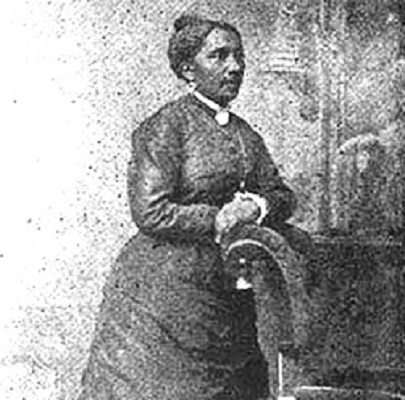
Elizabeth Jennings Graham

July 16 …
Elizabeth Jennings Graham was a pioneering educator and civil rights activist whose quiet determination helped lay the groundwork for desegregation and equal access in American public life decades before the modern Civil Rights Movement.
Born free in New York City in March 1827 (the exact date is unknown), Jennings Graham grew up in a household enriched by intellectual rigor and a strong moral foundation, being the daughter of inventor and abolitionist Thomas L. Jennings. This nurturing environment instilled in her a profound belief in education as both a personal right and a collective responsibility, shaping her roles as a teacher, church leader, and justice advocate.
Her most notable contribution to American history occurred on July 16, 1854, when she was forcibly ejected from a streetcar for refusing to vacate a whites-only section. Instead of accepting this humiliation, she and her family took the matter to court, leading to a legal victory that played a significant role in ending racial segregation on New York City’s streetcars.
This landmark case was not merely an isolated act of defiance, it was part of a larger strategy to assert Black citizenship through lawful resistance. It illustrated how individual bravery, combined with legal efforts, could dismantle entrenched discrimination and effectively shape public policy.
In addition to this critical moment, Jennings Graham made enduring contributions to American education. She dedicated much of her life to teaching, especially within Black institutions, and she taught under the New York City Board of Education after 1854. Ultimately, she became the first Black principal of a New York City public school, and founded the first kindergarten for African-American children in 1895.
In her classrooms, she prioritized academic excellence, moral discipline, and self-respect, viewing education as a means of cultural preservation and empowerment. Her efforts significantly influenced generations of Black students during a time when access to quality education was often limited or outright denied.
Influenced by her family, faith, and community leadership, Jennings Graham was inspired by her father, who exemplified how professional achievement could drive social change. The support of Black churches and mutual aid societies further reinforced her sense of civic duty.
She was a contemporary of notable Black activists and intellectuals such as Sarah Parker Remond, Charlotte Forten Grimké, and Frances Ellen Watkins Harper. While personal mentorship links to these figures may not be documented, they shared a common cultural and political landscape that shaped the era’s Black reform movements. Jennings Graham’s ideals resonated closely with the broader abolitionist and early civil rights movements, serving as her moral compass.
Although she did not receive formal recognition during her lifetime, Elizabeth Jennings Graham’s legacy has grown in both recognition and respect. Today, she is celebrated as a pioneer in civil rights and education, with schools, public programs, and historical commemorations honoring her contributions. Her life exemplifies how steadfast commitment — manifested through teaching, legal advocacy, and community leadership — can bring about lasting change.
In American culture and history, Elizabeth Jennings Graham serves as a testament to the idea that progress is often achieved not through grand gestures, but through principled action, dedication to knowledge, and a steadfast refusal to accept injustice as the norm.