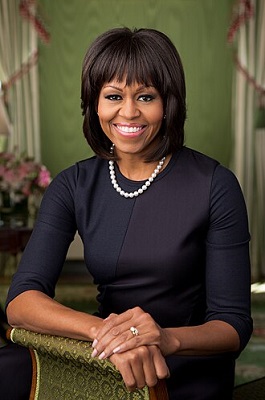
Michelle Obama


January 17 …
Michelle Obama is a lawyer, public servant, and cultural leader whose influence reshaped the role of First Lady as the wife of Barack Obama, the 44th President of the United States. She left a lasting imprint on American law, society, culture, and history.
Born on January 17, 1964 and raised in a working-class family on the South Side of Chicago, she was nurtured with values of discipline, education, and community responsibility, fostering an early awareness of structural inequality and personal resilience that would later shape her professional and public endeavors.
A trained attorney, Obama obtained degrees from Princeton University and Harvard Law School before commencing her legal career at a prominent Chicago law firm, where she specialized in corporate law and mentored younger associates. While she eventually departed from traditional legal practice, her legal foundation informed her analytical perspective on public policy, ethics, and governance. She later took on leadership roles at the University of Chicago and within Chicago’s city government, emphasizing public service, civic engagement, and educational access, and reinforcing her conviction that legal systems should serve tangible communities rather than abstract concepts.
As First Lady of the United States from 2009 to 2017, Obama transformed the role by intertwining advocacy, visibility, and cultural awareness. Her hallmark initiatives aimed at combating childhood obesity, supporting military families, increasing access to higher education, and advancing opportunities for girls globally. Programs like Let’s Move! and Reach Higher linked health and education to long-term civic involvement, while her international efforts underscored the critical importance of girls’ education as a foundation for democratic growth. She utilized her platform not merely as a ceremonial space but as a means of fostering lasting social change.
Obama’s influences and mentors span her family, education, and public life. Her parents instilled a sense of dignity, hard work, and accountability, while her teachers and academic mentors nurtured her intellectual confidence in environments where she was frequently underestimated. Professionally, she drew inspiration from women leaders in law, education, and civil rights who adeptly navigated institutional obstacles with purpose and clarity.
Her contemporaries include legal scholars, policymakers, and activists of her generation, while her role models range from historical figures who championed racial justice and women’s rights to cultural icons who illuminated complex social issues through storytelling.
Culturally, Obama emerged as a powerful symbol of contemporary American identity, seamlessly merging professional success with authenticity and emotional openness. Through her speeches, public appearances, and bestselling memoir, she broadened national dialogues on race, gender, mental health, family, and belonging. Her presence challenged restrictive interpretations of leadership and respectability, providing a model grounded in empathy, intellectual rigor, and real-life experience, rather than hierarchy or distance.
Obama’s contributions have garnered numerous honors and accolades, including prominent literary awards, humanitarian recognition, and widespread international acclaim. Beyond formal accolades, her lasting impact lies in how she redefined public expectations surrounding civic leadership and cultural influence.
Michelle Obama is a pivotal figure in American history, illustrating how the intersections of law, service, and culture can broaden opportunities, enhance democracy, and inspire future generations.