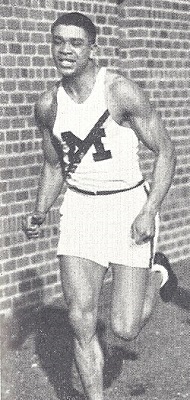
Willis Ward

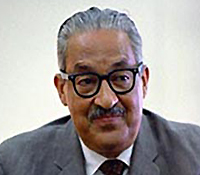

December 28 …
Willis Ward was a groundbreaking figure in American sports, law, and civil rights whose legacy spans several important arenas of 20th-century history.
Born in on December 28, 1912 in Detroit, MI, Ward quickly distinguished himself as a gifted athlete. At Northwestern High School and later at the University of Michigan, he became a multi-sport star, excelling particularly in football and track and field.
As one of the few Black athletes competing at the collegiate level during the early 1930s, Ward faced intense racial hostility, yet his performances regularly defied expectations. He became an All-American in track and one of Michigan’s top football players, helping to chip away at the color barrier in collegiate athletics.
One of the most infamous moments of Ward’s sports career came in 1934, when Georgia Tech refused to take the field if Ward played in an upcoming game. The University of Michigan acquiesced to their demands and benched Ward, sparking outrage and protest among students and faculty.
Although he himself publicly urged calm, the incident revealed the deep racial inequalities in American sports and ignited a stronger push toward integration. It also left a profound mark on Ward’s friend and teammate, Gerald R. Ford, who would later become President of the United States. Ford considered quitting the team in protest, a decision he ultimately did not take but which reflected the moral weight of the controversy.
After college, Ward pursued a brief professional athletic career, including an attempt to make the U.S. Olympic team in track and field. He was ranked among the top hurdlers in the nation, but systemic racism and the narrowing of opportunities for Black athletes after college curtailed his ambitions. He turned instead toward law and public service, graduating from Detroit College of Law. In doing so, Ward became one of the first Black men in Michigan to transition from elite athletics into the legal profession, marking a new chapter in his commitment to breaking racial barriers.
Ward’s legal and civic contributions were just as significant as his athletic ones. He served as a lawyer, assistant prosecutor, and eventually as a judge on the Wayne County Probate Court. He also held a number of appointments in state government, including a role on the Michigan Public Service Commission. Throughout these positions, Ward consistently advocated for fairness, equal rights, and access to justice, bringing the same determination to public service that had defined his sports career.
Beyond his individual achievements, Ward played a symbolic and practical role in the broader civil rights movement. His story became a powerful reminder of both the opportunities and obstacles facing African Americans in the mid-20th century. While he did not march alongside figures like Martin Luther King Jr., his presence in elite institutions — from the University of Michigan to the courtroom — helped normalize the idea of Black excellence in traditionally white-dominated spheres. He quietly challenged the status quo through perseverance, integrity, and a commitment to excellence in every field he entered.
Willis Ward’s legacy lives on not only in the halls of Michigan’s athletic history but in the broader arc of American social progress. He is remembered as a pioneer whose quiet dignity and persistent courage inspired change on the field, in the courtroom, and in the corridors of power.
In recent years, renewed attention to the story of Willis Ward has helped illuminate the complex intersections of race, sports, and justice in American life, offering a powerful example of how personal resolve and principled action can drive societal transformation.