
August 6 …
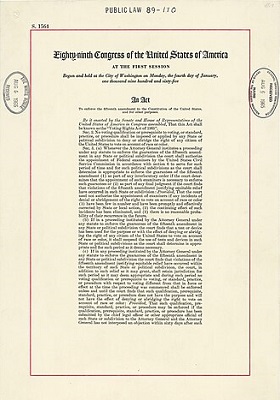
The Voting Rights Act of 1965, a landmark piece of civil rights legislation that sought to eliminate racial discrimination in voting, particularly in the Southern states where laws and practices systematically disenfranchised African American voters, was signed on this day in 1965.
In the years leading up to the act, many Black Americans faced significant barriers to voting, including literacy tests, poll taxes, and outright intimidation. The most egregious examples of voter suppression were seen in the South, where state and local governments enforced discriminatory laws designed to keep African Americans from the polls.
The events of Bloody Sunday in Selma, AL, where peaceful protesters were violently attacked while marching for voting rights, played a pivotal role in galvanizing national support for stronger federal action.
In response to the growing calls for justice, President Lyndon B. Johnson delivered a powerful address to Congress in March 1965, calling for a new law to guarantee the right to vote for all citizens. This culminated in the passage of the federal statute on August 6, 1965.
The Act banned discriminatory practices such as literacy tests and provided federal oversight in areas with a history of racial discrimination in voting. It also included provisions to monitor elections and ensure that all eligible voters had access to the polls. The law was a crucial step in dismantling the institutionalized racism that had long plagued the electoral process in the United States.
The passage of the legislation marked a major victory in the Civil Rights Movement, significantly increasing voter registration and participation among African Americans, particularly in the South. However, the fight for voting rights did not end with the act’s passage.
In 2013, the U.S. Supreme Court struck down a key provision of the act, Section 4(b), which determined which states and localities required federal oversight. This decision led to a resurgence of voter suppression tactics in certain states, sparking new debates over the protection of voting rights and the ongoing struggle for equality at the ballot box.
The Voting Rights Act of 1965 remains a foundational achievement in the history of American civil rights, but the need for vigilance in protecting these rights persists to this day.