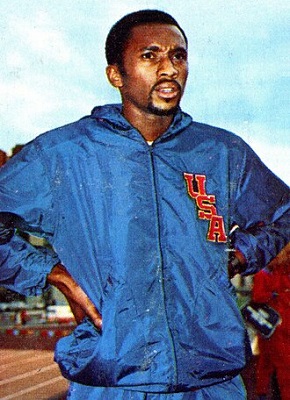
Tommie Smith


June 6 …
Tommie Smith is a transformative figure in American sports history whose record-breaking speed and moral courage reshaped the relationship between athletics, civil rights, and national identity.
Born on June 6, 1944 in Clarksville, TX and raised in California, Smith rose from humble beginnings to become one of the most electrifying sprinters of his time. His journey paralleled the tumultuous 1960s, a decade marked by struggle and reform, and he became a symbol of both sporting excellence and principled resistance. More than just a champion on the track, Smith emerged as a global icon of conscience, proving that athletes could leverage their platforms to impact society and culture well beyond the confines of stadiums.
Smith’s athletic achievements were remarkable. Competing for San Jose State College under the esteemed coach Bud Winter, he became a dominant force in the 200 and 400 meters.
At the 1968 Olympic Games in Mexico City, he claimed the gold medal in the 200 meters, setting a world record of 19.83 seconds — the first officially timed instance of the event falling under 20 seconds. His victory was part of a notable performance by American sprinters, including his teammate John Carlos, who won bronze, along with contemporaries like Lee Evans and Bob Beamon, all of whom were pushing the limits of speed and power. Smith’s graceful stride and commanding finishes solidified his status as one of the premier athletes of his era, admired for both his natural talents and rigorous training.
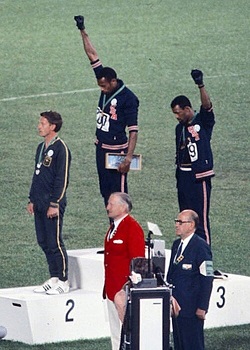
Smith (center) and John Carlos (right) showing the raised fist on the podium after the 200 m race at the 1968 Summer Olympics; both wear Olympic Project for Human Rights badges. Peter Norman (silver medalist, left) from Australia also wears an OPHR badge in solidarity with Smith and Carlos. (photo credit: Angelo Cozzi, Mondadori Publishers)
Inspired by civil rights leaders like Martin Luther King Jr. and earlier trailblazers such as Jesse Owens and Jackie Robinson, Smith believed that athletic success carried the duty to confront injustice.
After the Olympics, Smith briefly played professional football in the National Football League before dedicating much of his life to education and mentorship as a track coach. His commitment to guiding young athletes mirrored the support he received from figures like Harry Edwards, whose advocacy for athlete activism shaped Smith’s perspective.
Many years after the 1968 controversy, public recognition of his bravery swelled. In 2008, Smith and John Carlos received the Arthur Ashe Courage Award for their principled stance, and Smith was inducted into the U.S. Olympic & Paralympic Hall of Fame. A statue at San Jose State University commemorates the iconic podium moment, ensuring that future generations grasp both the athletic and social dimensions of his legacy.
Tommie Smith’s impact reaches far beyond medals and records. He redefined what it means to be an American champion. By merging world-class performance with a steadfast commitment to human rights, he expanded the cultural role of athletes and inspired countless sports figures to advocate for justice and equality.
The legacy of Tommie Smith lives on in every athlete who sees sport as a platform for change, and his raised fist stands as a lasting testament to the power of conviction under pressure.