
December 30 …
The Triple Nickles — officially designated the 555th Parachute Infantry Battalion — was the first all-Black U.S. Army airborne unit whose service during World War II and afterward advanced military integration, broke racial barriers, and influenced American culture and civil-military history.
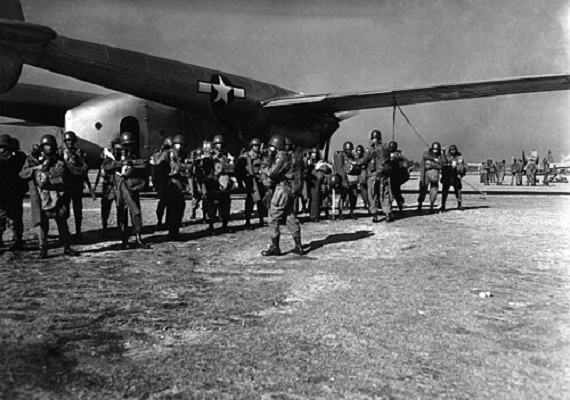
Activated on December 30, 1943 at Fort Benning, GA, the company was established during a time of segregation and limited opportunities for Black soldiers in airborne and elite units. It trained as a paratroop unit and was later deployed stateside for specialized missions, rather than engaging in overseas combat. This situation reflected the racial policies of the era, as well as the unit’s remarkable abilities.
The support of enlisted leaders and noncommissioned officers formed the foundation of the company. It attracted volunteers from across the segregated Army, including Black soldiers eager to demonstrate their capabilities in elite service, and many who would later emerge as leaders within the Black military community.
The battalion’s most significant achievement came during the “Operation Firefly” assignment from 1945 to 1946. They were deployed to the West Coast, where they parachuted into challenging terrains to combat numerous Japanese balloon bombs and wildfires that threatened the Pacific Northwest and Sierra Nevada. This mission marked the Army’s first all-Black smokejumping and wildfire suppression operations.
Although the unit did not engage in overseas combat, their technical skill, airborne proficiency, and disciplined service directly challenged prevalent notions regarding the suitability of Black soldiers for specialized combat roles. Their efforts also helped pave the way for President Truman’s 1948 Executive Order 9981, which desegregated the armed forces.
The battalion received commendation within military and veteran communities for their groundbreaking contributions and professionalism. The unit has been honored in historical accounts, memorials, and commemorations that acknowledge its significance in both military and civil rights history.
The legacy of The Triple Nickles lives on in the integration of airborne and special operations forces, and they remain a symbol of Black service, resilience, and the gradual progress toward equality in the U.S. military.