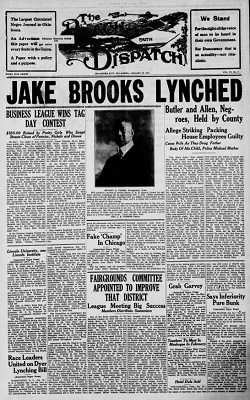
The Black Dispatch


September 21 …
The Black Dispatch — a highly influential African American newspaper published in Oklahoma City — played a major role in shaping Black journalism, civil rights advocacy, and community identity in the United States during much of the 20th century. The earliest surviving copies in existence today were published on September 21, 1917.
Founded in 1915 in Oklahoma City, OK, the newspaper was founded by journalist and civil rights advocate Roscoe Dunjee, who utilized his savings from successful farming and his printing background to purchase a press and launch the paper. It quickly became the first major Black-owned publication in Oklahoma City, emerging during the Jim Crow era when African Americans were largely excluded from mainstream media.
Dunjee established the newspaper out of a necessity and commitment to activism. He aimed to provide a voice against segregation, lynching, and economic injustice, while fostering civic engagement and advocating for constitutional rights for African Americans.
From its inception, the paper was significantly influenced by the national Black press movement and organizations like the NAACP, as well as fraternal groups such as the Knights of Pythias, which the paper actively supported and reported on. Under Dunjee’s editorial guidance, it gained a reputation for fearless investigative journalism and persuasive editorials, confronting segregation in education, housing, transportation, and the legal system.
The newspaper maintained strong ties to broader African American intellectual movements, aligning with figures like W.E.B. Du Bois in championing constitutional rights and racial equality. Its readership included African American communities throughout Oklahoma and — notably for a regional paper — a substantial out-of-state subscriber base, providing it with national reach while also creating financial challenges due to mismatched advertising markets.
A crucial aspect of the paper’s influence was its role in shaping public discourse and activism. It served not only as a news source, but also as a civic platform that encouraged legal challenges to discrimination and supported civil rights litigation and organizing efforts both in Oklahoma and beyond.
Dunjee utilized the paper to amplify campaigns against lynching and voter suppression, while showcasing the accomplishments of Black communities often overlooked by white-owned media. The paper was deeply connected to Oklahoma City’s Black residents, particularly in neighborhoods like Deep Deuce, but also reached educators, clergy, and activists who relied on it for political insights and updates on national civil rights issues.
Key stakeholders included the newspaper’s founder, his nephew John Dunjee, and other editors and collaborators who sustained the publication through the mid-20th century. Drusilla Dunjee Houston, the founder’s sister, contributed editorials and intellectual content from the paper’s early days, shaping its historical and cultural narratives.
The paper also impacted emerging writers and thinkers. For instance, novelist Ralph Ellison worked as a courier and gained early exposure to journalism and civil rights discourse that would later influence his literary career. These connections helped the newspaper function as both a media outlet and an incubator for Black intellectual life.
The newspaper ceased publication in 1980, but its legacy continued through successor publications like the Black Chronicle, which traces its roots back to the paper. Roscoe Dunjee was later recognized as a significant figure in American Black journalism and posthumously inducted into the Oklahoma Journalism Hall of Fame, underscoring the lasting impact of the publication he founded.
Contributions by The Black Dispatch to American society have been widely acknowledged in historical and journalism scholarship, especially for its role in advancing civil rights advocacy, challenging racial injustices, and documenting Black life in Oklahoma during segregation.