
March 4 …
South Carolina State University traces its origins to March 4, 1896, when the South Carolina General Assembly established the Colored Normal, Industrial, Agricultural and Mechanical College of South Carolina in Orangeburg under the Second Morrill Act of 1890.
Listen to this story:
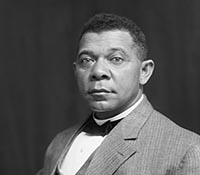
The institution emerged from the efforts of African American leaders seeking to preserve educational opportunities amid the rise of segregation in the post-Reconstruction South. The central figure in its founding was Thomas Ezekiel Miller, a lawyer, educator, state legislator, and former congressman who became the principal architect of the new college.
Born into slavery and educated during Reconstruction, Miller spent much of his public career advocating for Black education and political participation. Working with other African American educators, ministers, and public officials, he championed the creation of a state-supported institution to prepare African Americans for careers in teaching, agriculture, industry, and public service.
Upon the college’s establishment, Miller was appointed its first president and directed its formative development. The institution opened with fewer than 200 students and a small faculty, offering instruction in teacher training, agriculture, mechanical arts, and academic subjects to equip students for leadership in South Carolina’s Black communities.
Under Miller’s leadership, the college quickly became the state’s principal public institution for African American higher education. Its curriculum embodied the educational philosophy of Black land-grant institutions at the turn of the 20th century, blending practical training with intellectual and civic development.
The college expanded steadily in the early decades of the 20th century, adding academic programs and increasing enrollment. In 1944, its name was changed to South Carolina State College to reflect its broader collegiate mission. As opportunities for African Americans gradually expanded, the institution became a leading center for teacher preparation, agricultural education, and professional training throughout the Southeast.
The university also played a significant role in the Civil Rights Movement. Students and faculty participated in campaigns challenging segregation and discrimination throughout the 1950s and 1960s.
The most tragic episode in the institution’s history occurred on February 8, 1968, during the Orangeburg Massacre. State highway patrol officers opened fire on student demonstrators protesting segregation at a local bowling alley, killing Samuel Hammond Jr., Henry Smith, and Delano Middleton, and wounding dozens of others. The event remains one of the most consequential, yet often overlooked tragedies of the Civil Rights Movement and is commemorated annually by the university.
South Carolina State has educated generations of leaders in government, public service, athletics, and business. Distinguished alumni include:
- James E. Clyburn (1961), one of the most influential members of the U.S. House of Representatives;
- Harry Carson (1976) of the New York Giants; and
- Barbara-Rose Collins (1958), former U.S. Congresswoman from Michigan.
Through these and thousands of other graduates, the university has exerted a lasting influence on public life throughout South Carolina and the nation.
Today, the institution remains the state’s only public historically Black land-grant university. Offering programs in engineering, business, education, agriculture, health sciences, and the liberal arts, it continues the mission envisioned by Thomas E. Miller and the institution’s early supporters.
More than a century after its founding, South Carolina State University stands as a testament to African Americans’ determination to secure educational opportunity, civic advancement, and economic progress despite persistent barriers.
Selected Sources:
- South Carolina General Assembly. “Act No. 135, Establishing the Colored Normal, Industrial, Agricultural and Mechanical College of South Carolina.” March 4, 1896.
- Miller, Thomas E. My South Carolina Days and Life in Washington. Columbia: University of South Carolina Press, 1999 (originally published 1939).
- Williams, John A. South Carolina State University: A Black Land-Grant College in Jim Crow America. Orangeburg: South Carolina State University Press, 1996.
- Bass, Jack, and Jack Nelson. The Orangeburg Massacre. Macon, GA: Mercer University Press, 2003.