Selma Voting Rights Marches


March 7 …
The Selma Voting Rights Marches of 1965 became one of the most influential campaigns of the American civil rights era, dramatically advancing the struggle for voting rights, racial equality, and democratic participation in the United States.
The Selma marches originated from years of systematic voter suppression faced by African Americans in Alabama, particularly in Dallas County, where Black citizens encountered literacy tests, intimidation, economic retaliation, and violence when trying to register to vote. By early 1965, local activists and national civil rights organizations ramped up their efforts to confront these discriminatory practices.
The movement gained urgency following the tragic shooting of Jimmie Lee Jackson, a young African American activist, by an Alabama state trooper on February 18, 1965, during a peaceful protest in Marion, AL. In response, civil rights leaders organized a march from Selma to Montgomery to demand federal protection for voting rights and to expose the brutality used to prevent African Americans from achieving equal citizenship. The first march took place on March 7, 1965, a day that became infamously known as Bloody Sunday when state troopers and deputies violently attacked peaceful marchers on the Edmund Pettus Bridge.
Key participants in the Selma Movement included thousands of local residents, church leaders, students, and national activists who bravely risked arrest and physical harm in their quest for justice. Prominent leaders included Dr. Martin Luther King Jr., John Lewis, Hosea Williams, Amelia Boynton Robinson, James Bevel, Diane Nash, and Reverend Ralph Abernathy.
Organizations like the Southern Christian Leadership Conference (SCLC) and the Student Nonviolent Coordinating Committee (SNCC) were instrumental in organizing demonstrations, voter registration efforts, and public awareness campaigns. John Lewis, then chairman of SNCC, sustained severe injuries during Bloody Sunday, while Amelia Boynton Robinson became a national symbol of courage after photos captured her unconscious on the bridge following the attack. Their commitment to nonviolent protest garnered widespread sympathy and transformed Selma into an international emblem of the struggle for democracy and human rights.
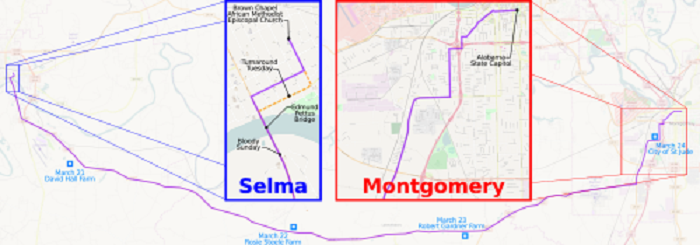
Map showing route of the Selma to Montgomery Marches in March 1965. Includes campsites vector overlay on OpenStreetMap raster, derived from National Park Service brochures and information for Selma To Montgomery National Historic Trail. (photo by Mliu92 — own work, derived from National Park Service information)
The marches had a profound impact on civil rights, social justice, culture, and national history. Graphic television footage of the violence against peaceful demonstrators shocked millions of Americans and heightened pressure on the federal government to act. In response, President Lyndon B. Johnson publicly endorsed voting rights legislation, addressing Congress with the historic proclamation, “We shall overcome.”
The campaign played a direct role in the passage of the Voting Rights Act of 1965, signed into law on August 6, 1965, which prohibited discriminatory voting practices and authorized federal oversight in states with histories of voter suppression. The marches also bolstered the broader Civil Rights Movement by showcasing the effectiveness of organized grassroots activism, religious leadership, interracial collaboration, and national media attention in challenging institutional injustice.
The primary beneficiaries of the Selma Movement were African Americans across the South, who gained enhanced access to voter registration, political representation, and engagement in public life. Key stakeholders included civil rights organizations, Black churches, federal officials, journalists, labor groups, students, and everyday citizens advocating for democratic reform.
The Civil Rights Movement and its leaders received lasting recognition and honors in the following decades. In 2015, during the 50th anniversary commemorations of the marches, surviving participants were celebrated nationally for their sacrifices and contributions to American democracy. John Lewis was later awarded the Presidential Medal of Freedom, and many Selma activists were honored through museums, memorials, educational programs, and historical preservation efforts.
Today, the Selma Voting Rights Marches remain powerful symbols of courage, citizenship, and the ongoing pursuit of equal rights and social justice in the United States.
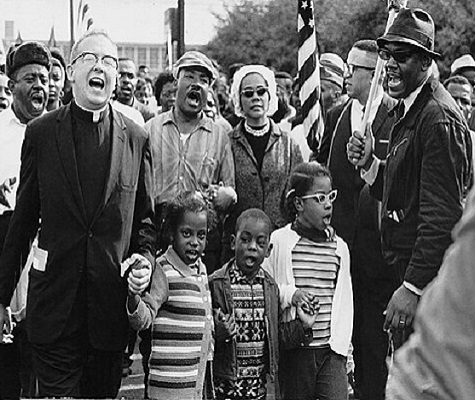
About The Photo:
- The Abernathy children are on front line leading the march for the right to vote. Civil Rights Movement co-founder Dr. Ralph David Abernathy and his wife Mrs. Juanita Abernathy follow with Dr. and Mrs. Martin Luther King Jr. as they and the children — Donzaleigh Abernathy in striped sweater, Ralph David Abernathy 3rd, and Juandalynn R. Abernathy in glasses — lead the Selma To Montgomery March in 1965. The white Minister on the left is James Reeb and John Lewis is on the far right. (photo by Abernathy Family, Abernathy Family Photos)