
March 27 …
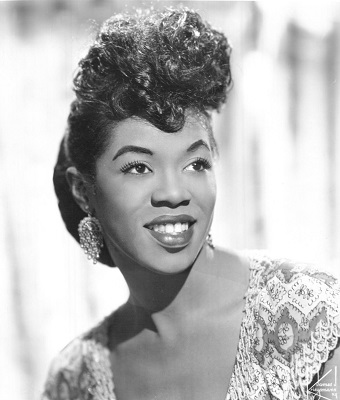
Sarah Vaughan emerged as one of the most extraordinary voices in American music history.
Born on March 27, 1924, in Newark, NJ and raised in a deeply religious household, she was introduced to music through the church, where she sang and played piano. From an early age, Vaughan displayed an uncanny vocal talent, blending technical precision with rich emotional expression.
Vaughan’s big break came in 1942 when she won an amateur contest at Harlem’s Apollo Theater, catching the attention of jazz greats Earl Hines and Billy Eckstine. This marked the beginning of a career that would span decades and redefine vocal jazz.
Known affectionately as “Sassy” and later “The Divine One,” Vaughan possessed a contralto voice of remarkable range and agility. She was equally adept at complex bebop improvisation and lush balladry, setting her apart from many of her contemporaries.
Working alongside jazz legends such as Dizzy Gillespie, Charlie Parker, and Miles Davis, Vaughan held her own with instrumental virtuosos, turning her voice into a flexible and expressive instrument. Her recordings from the 1940s and ’50s, including “Misty,” “Lullaby of Birdland,” and “Tenderly,” remain timeless examples of her vocal mastery.
Beyond her technical brilliance, Vaughan brought a unique artistic presence that helped expand the possibilities for vocalists in jazz and popular music. She blurred the boundaries between genres, effortlessly moving from jazz standards to Broadway tunes, blues, and pop.
Unlike many jazz singers who were confined to niche audiences, Vaughan reached mainstream success while maintaining her artistic integrity. Her influence extended across genres, impacting not only fellow jazz vocalists like Ella Fitzgerald and Carmen McRae but also pop and soul singers who admired her phrasing, tone, and improvisational daring.
Vaughan’s career also carried cultural significance at a time when African American artists faced systemic barriers in the music industry. She challenged expectations of how Black women were perceived in entertainment — commanding the stage with elegance, authority, and unmistakable talent.
Her global tours during the height of segregation demonstrated the universal appeal of her artistry, and she served as an ambassador for American music abroad. Vaughan’s success helped break down racial and gender barriers, showing that a Black woman could achieve international fame on her own terms.
In addition to her live performances and recordings, Vaughan was a trailblazer in the business side of her career. She was known for demanding creative control and better contracts, paving the way for future generations of artists to assert greater agency over their work.
She recorded prolifically for major labels and collaborated with some of the most important arrangers and composers of her time, including Quincy Jones and Michel Legrand. Her discography is vast, showcasing her versatility across orchestral arrangements, small jazz combos, and solo piano accompaniment.
Vaughan’s contributions to American music, culture, and history remain indelible. Her voice, often described as one of the most beautiful and versatile ever recorded, transformed vocal jazz and expanded the artistic possibilities for singers of all genres. She helped elevate jazz to high art and brought dignity and sophistication to every performance.
The legacy of Sarah Vaughan lives on not only in her recordings but in the generations of vocalists she inspired to pursue both excellence and authenticity. She passed away in 1990, but her music continues to resonate, a testament to the power of voice, identity, and artistic innovation.