

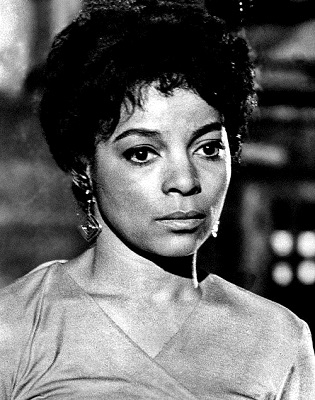
Ruby Dee



October 27
Ruby Dee was a distinguished actress, writer, and activist whose groundbreaking career spanned over seven decades and left an indelible mark on American film, theater, and television.
Born on October 27, 1922 in Cleveland, OH and raised in Harlem, NY, Dee developed a love for the arts early on, nurtured by her education and exposure to Harlem’s vibrant cultural scene.
She graduated from Hunter College with a degree in Romance languages but gravitated toward the stage, where her extraordinary talent and eloquence quickly made her a standout. In an industry that routinely marginalized Black women, Dee carved out a place for herself with grace, strength, and unwavering purpose.
Her career took off in the 1940s with a series of impactful theater roles, most notably in the American Negro Theatre, where she honed her skills and met her future husband and collaborator, Ossie Davis. Dee gained national recognition with her performance in the stage and film versions of A Raisin in the Sun, portraying Ruth Younger with emotional depth and subtlety. This landmark production was not only a pivotal moment in her career but also a cultural milestone in American theater, offering one of the first authentic depictions of Black family life on a major stage. Dee’s performances were celebrated for their honesty and humanity, traits that remained hallmarks of her work throughout her life.
In addition to her theater accomplishments, Ruby Dee built an impressive résumé in film and television. She appeared in numerous films such as The Jackie Robinson Story, Do the Right Thing, and American Gangster, earning critical acclaim and industry awards, including an Academy Award nomination later in life.
On television, she brought nuance and poise to a wide range of characters in series and specials that spanned genres and decades. Dee was a consummate professional whose presence elevated every project she was part of, and her longevity in the industry spoke to both her talent and her adaptability in a rapidly changing cultural landscape.
Beyond her artistic achievements, Dee was deeply involved in the civil rights movement, using her fame and platform to advocate for justice and equality. Alongside Ossie Davis, she participated in protests, rallies, and fundraising efforts for organizations like the NAACP, CORE, and SNCC.
She was a close friend and supporter of both Malcolm X and Martin Luther King Jr., and she viewed her activism as inseparable from her art. For Dee, acting was not just performance — it was a way to reflect truth, inspire change, and affirm the dignity of Black life in America.
Ruby Dee’s contributions to American culture were profound and far-reaching. She helped redefine the roles available to Black women in entertainment, insisting on complexity, intelligence, and authenticity in every part she played. Her commitment to art as a vehicle for social transformation made her a guiding light for generations of performers and activists alike.
With a legacy that encompasses powerful performances, fearless advocacy, and a lifetime of service to her community and country, Ruby Dee remains a towering figure in the story of American arts and history.
