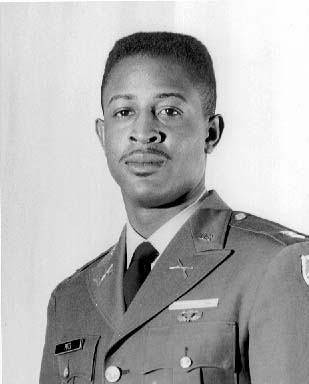
Riley Leroy Pitts
October 31
Captain Riley Leroy Pitts was a trailblazing figure in American military history, remembered not only for his bravery on the battlefield but also for breaking racial barriers within the United States Army.
Born on October 15, 1937 in Fallis, OK, Riley Pitts grew up in a segregated America where opportunities for African Americans were often limited by systemic discrimination. Despite these obstacles, Pitts excelled in academics and leadership, eventually graduating from Wichita State University with a degree in journalism. His decision to join the U.S. Army came at a time when African Americans were underrepresented in leadership roles, and his career would soon become a symbol of courage and progress.
Upon receiving his commission through ROTC, Pitts was assigned to the Infantry and rapidly rose through the ranks due to his dedication, intelligence, and exceptional leadership qualities. By 1967, he had become a captain and was serving in Vietnam during one of the most tumultuous periods of the conflict. In this crucible of combat, Captain Pitts distinguished himself not only by his tactical proficiency but by the moral courage he demonstrated in the face of danger. He often volunteered for the most perilous missions and remained resolute in his commitment to protect both his fellow soldiers and innocent civilians affected by the war.
On October 31, 1967, Captain Pitts’ unit came under heavy fire while conducting operations near Ap Dong in the Republic of Vietnam. Demonstrating extraordinary valor, he led a counterattack through dense jungle terrain, directly engaging enemy forces under withering fire. During the assault, Pitts threw back several enemy grenades and used captured weapons to continue the fight when his own ran out of ammunition. His selflessness and determination turned the tide of the engagement, saving many of his men from certain death. Tragically, he was killed during the encounter, but his actions left an indelible mark on all who witnessed them.
For his exceptional bravery, Captain Riley Leroy Pitts was posthumously awarded the Medal of Honor, becoming the first African American commissioned officer to receive the nation’s highest military decoration. President Lyndon B. Johnson presented the medal to his widow, Eula Pitts, in a ceremony that underscored both the pain of loss and the pride in such a heroic legacy. The citation praised his “personal bravery and leadership at the cost of his life” and described how his courage inspired his fellow soldiers to hold their position and complete the mission under extreme circumstances.
Captain Pitts’ legacy reaches far beyond the battlefield. His heroism challenged longstanding prejudices and served as a powerful testament to the potential of African Americans in roles of leadership and sacrifice. At a time when the United States was grappling with civil rights tensions, his service and ultimate sacrifice stood as a unifying symbol, bridging racial divides through a shared reverence for courage, duty, and honor. His story became an inspiration for future generations of Black officers and soldiers who looked to him as a pioneer and role model.
Today, Riley Pitts is remembered not only as a war hero but as a man of principle and purpose. His name graces military facilities, scholarships, and public memorials, ensuring that his contributions are not forgotten. More than fifty years after his death, his example continues to teach us about the true meaning of patriotism and the powerful legacy one individual can leave through acts of profound courage and selflessness.
Through his life and sacrifice, Captain Riley Leroy Pitts helped shape a more inclusive and honorable vision of American service.