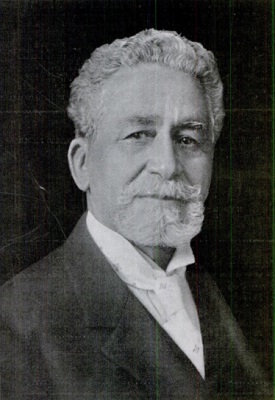
Richard Greener



January 30
Richard Theodore Greener, was a pioneering African American intellectual whose life and career embodied the pursuit of excellence in the face of formidable societal barriers.
Born on January 30, 1844 in Philadelphia, PA and raised in Boston — after early years in Philadelphia and brief financial hardship — Greener’s academic promise was evident early on. He became the first Black graduate of Harvard College in 1870, an extraordinary achievement that signaled his determination to challenge racial norms in the United States. His Harvard education laid a foundation for his influential roles in academia, law, and civil service during the Reconstruction and post-Reconstruction eras.
Greener’s contributions to American education were both historic and transformative. In 1873, he was appointed as a professor at the University of South Carolina, becoming the institution’s first Black faculty member. During a brief window in Reconstruction when the university was integrated, Greener taught philosophy, Latin, and constitutional law, championing the idea that African Americans deserved equal access to higher education. His presence at the university stood as a powerful symbol of the possibilities of racial equality in education, even as such opportunities would soon recede with the advent of Jim Crow laws.
While on the USC faculty and enrolled in USC’s Law School, Greener also served as associate editor for the New National Era, a newspaper owned and edited by Frederick Douglass.
Beyond education, Greener was deeply involved in the legal world. After earning a law degree from the University of South Carolina, he became active in the legal and political life of Washington, DC. He served as a law clerk for the U.S. Treasury and as a professor and dean at Howard University Law School. His work in law was guided by a belief in justice and equal rights under the Constitution — principles he sought to instill in the next generation of Black lawyers and civil servants. Greener used his legal training not only to teach but also to engage in public discourse around civil rights and social equity.
Greener’s cultural and diplomatic influence extended internationally when he was appointed as a U.S. diplomat to Vladivostok, Russia, in the late 1890s. His service abroad reflected both his linguistic talents and his commitment to representing African Americans in spheres traditionally closed to them. While in Russia, he advocated for African American interests and preserved valuable documents that are now considered crucial artifacts in American and African American history. His international experience gave him a broader view of racial struggles and the role of the United States on the global stage.
Greener’s daughter, Belle da Costa Greene, director of the Pierpont Morgan Library in New York City and one of the most powerful women in the world of rare books, made extraordinary contributions to literature, education, business, and archival preservation.
Throughout his life, Greener remained a tireless advocate for civil rights, education, and the cultural enrichment of African Americans. Despite facing racial discrimination and professional obstacles, he consistently pushed boundaries and redefined what was possible for Black Americans during a time of deep national division.
The intellectual legacy and personal resilience of Richard Theodore Greener continue to inspire historians, educators, and civil rights advocates, earning him a lasting place in the narrative of American progress.