

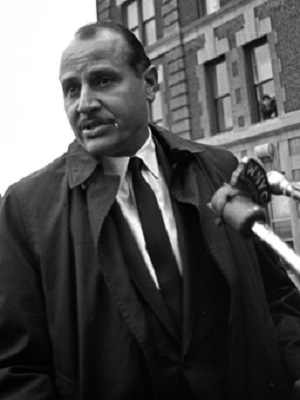
Percy Sutton


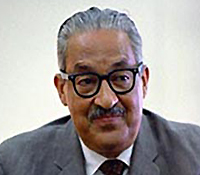

November 24 …
Percy Sutton was a prominent American civil rights lawyer, political leader, and media entrepreneur whose work helped shape modern Black political power, urban governance, and cultural expression in the United States during the second half of the 20th century.
Born on November 24, 1920 in San Antonio, TX, Sutton grew up in a large family that valued education, faith, and civic engagement. His father, Samuel Johnson Sutton, was a Baptist minister and civil rights advocate who introduced his children to concepts of racial justice and community leadership early on.
Sutton attended Prairie View A&M College before serving in the U.S. Army during World War II with the Tuskegee Airmen support units. After the war, he pursued higher education at New York University, obtaining both undergraduate and law degrees. His legal education, alongside the inspiration he drew from admired civil rights figures, solidified his dedication to advocacy and public service.
As a young attorney in New York City, Sutton quickly connected with the emerging network of Black political leadership in Harlem. He formed relationships with activists, clergy, and community organizers who were fighting for expanded civil rights and economic opportunities.
Sutton gained national recognition through his legal career and associations with influential figures of the Civil Rights Movement. He served as the longtime attorney for Malcolm X, playing a pivotal role in navigating the legal and political challenges faced by him during the 1960s. He collaborated with major civil rights leaders, including Martin Luther King Jr., and was part of the Harlem political scene alongside figures like Adam Clayton Powell Jr.
In 1965, he was elected to the New York City Council, representing Harlem and becoming one of the most prominent Black elected officials in New York politics. Alongside contemporaries like David Dinkins and Charles Rangel, Sutton worked to advance legislation and policies aimed at enhancing housing, education, and economic opportunities in underserved communities.
Beyond his legislative efforts, Sutton significantly impacted the political structure of New York City government. He became Manhattan Borough President in 1966, serving until 1977 and becoming one of the highest-ranking African American officials in the city at that time. In this role, he championed urban development initiatives, promoted community empowerment programs, and guided Harlem through significant social and economic transitions.
Sutton was also an important figure in media and business. As a co-founder of Inner City Broadcasting Corporation, he established radio stations that amplified Black voices, culture, and political discourse, making these stations central to African American cultural expression in New York. His entrepreneurial endeavors illustrated how political leadership could intersect with cultural influence, using media to enhance community identity and political consciousness.
Throughout his life, Sutton remained deeply involved in civic leadership, mentoring younger politicians, activists, and media professionals who continued the mission of expanding representation and opportunity. His career earned him numerous accolades, including civic awards, honorary degrees, and public tributes for his contributions to civil rights and urban governance.
After decades of impactful leadership in politics, law, and media, Sutton was widely respected as a bridge between the Civil Rights Movement and the modern era of Black political leadership in major American cities.
Upon his passing on December 26, 2009, Percy Sutton left a legacy rooted in advocacy, institution building, and cultural empowerment — one that transformed Harlem into a hub of political influence and reinforced the broader struggle for equality and representation in American public life.
