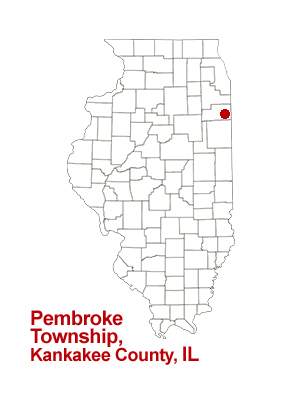
Pembroke Township, IL

February 17 …
Pembroke Township in Illinois (Kankakee County) is a place with a remarkable yet often overlooked story in American history.
Established on February 17, 1877, Pembroke Township originated in the 1860s when Joseph Tetter — aka Joseph “Pap” Tetter — and his family, formerly enslaved individuals from North Carolina, settled in the area. This township emerged as one of the earliest and most resilient Black rural communities in the northern United States.
Pap Tetter became one of the region’s first Black landowners, transforming his acquisition of land into a settlement that granted autonomy to his large family and provided refuge to others seeking freedom during and after slavery. He founded Pembroke Township and nurtured a self-sustaining Black farming community. His achievements not only established Pembroke as one of the oldest and largest African-American rural settlements in the North but also solidified his significance in both African-American and Illinois history.
Oral histories suggest that Hopkins Park, a village within the township, served as a stopping point on the Underground Railroad, offering shelter and support to freedom seekers heading north. By the mid-20th century, Pembroke had evolved into one of the largest concentrations of Black farmers north of the Mason-Dixon line, profoundly influencing the local culture and identity.
Agriculture and land stewardship have long defined Pembroke Township’s culture. Despite the region’s sandy and challenging soil — viewed as poor by outsiders — African-American farmers developed resilient and innovative practices that sustained their families and contributed to regional markets, including supplying produce to urban centers like Chicago during the Great Migration. During World War II, local farmers even played a significant role by cultivating hemp for the U.S. Navy, making Pembroke the third-largest hemp producer in the nation at that time. These agricultural successes embody a broader legacy of self-reliance, creativity, and a deep connection to the land that continues to resonate among residents today.
Demographically, Pembroke Township has remained predominantly African-American for generations, a reflection of its settlement patterns and social history. Census data confirms that the Black population constitutes a large majority of residents, alongside smaller percentages of other racial and ethnic groups.
Over the years, the township has faced significant economic challenges, including high poverty rates, inadequate infrastructure, and population decline. These issues mirror broader trends of economic neglect and isolation, yet they have also cultivated a strong sense of community identity and mutual support. Agricultural initiatives and conservation efforts led by local organizations focused on farmland restoration and education highlight an ongoing commitment to cultural preservation and community revitalization.
Pembroke’s history is deeply intertwined with African-American narratives of migration, resilience, and rural existence. For many Black families, moving to Pembroke provided an escape from the oppression and overcrowding in Southern states and urban centers during the early to mid-20th century. This migration fostered a unique cultural landscape where traditions from the rural South merged with Midwestern influences, reinforcing a strong community ethos grounded in agriculture, faith, and shared heritage. Despite facing stereotypes and misconceptions about the township’s economic status, residents have continuously celebrated their collective history and maintained cultural practices honoring their ancestors’ struggles and victories.
Pembroke Township’s contributions to American culture and history extend well beyond its agricultural legacy. The township illustrates a unique African-American rural experience that contrasts dominant narratives focused on urban life. Its story illuminates themes of freedom, land ownership, community resilience, and environmental stewardship, offering valuable insights into the diverse ways African-American communities have shaped the nation’s social and cultural fabric.
Ongoing efforts by local organizations and residents to preserve farmland, protect rare ecosystems, and revitalize community infrastructure further illustrate how Pembroke Township in Illinois (Kankakee County) continues to influence discussions surrounding cultural heritage, land justice, and sustainable rural development in America.