
February 27 …
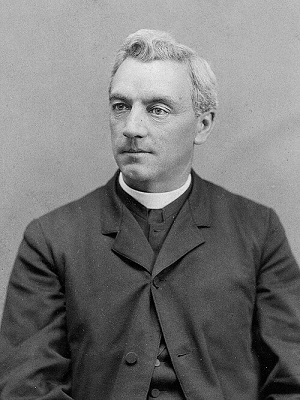
Patrick Francis Healy was a transformative figure in American education and religion, best known as the first African American to serve as president of a predominantly white university — Georgetown University, its 29th president — though his racial identity was not publicly acknowledged during his lifetime.
Born on February 27, 1834 in Macon, GA to an Irish immigrant father and an enslaved African American mother, Healy — like his siblings — was legally enslaved by birth.
Despite being born into slavery, he and his siblings were notable for high achievements because their father ensured that their children were sent North to receive a Catholic education and escape the restrictions of race and slavery in the South. His siblings were:
- James Augustine Healy — first known African American Catholic priest and bishop in the United States;
- Michael Augustine Healy — first African American to command a ship of the United States government; and
- Mary Magdalen Healy — first African American superior of a religious community in the United States.
Patrick Healy eventually entered the Society of Jesus (Jesuits), becoming both a priest and a scholar of exceptional ability. He earned his doctorate in philosophy in Europe and returned to the United States with a passion for education and reform.
In 1874, he was appointed president of Georgetown University, a role that positioned him to enact lasting change. Under his leadership, Georgetown evolved from a small college into a modern university. He expanded the curriculum, strengthened academic standards, improved financial management, and oversaw major construction projects, including the iconic Healy Hall, which still stands as a symbol of the university’s legacy. His tenure marked a turning point in Catholic higher education in America, moving it toward greater academic rigor and institutional prominence.
As a Jesuit, Healy brought a strong sense of mission and discipline to his work, blending spiritual purpose with intellectual excellence. He believed deeply in the power of education to shape moral character and social responsibility, ideals that were central to Jesuit pedagogy.
Although he did not publicly engage in discussions about race or civil rights, his very presence as a leader of African descent in such a prominent position subtly defied the racial hierarchies of his era. His work reflected a commitment to the Jesuit ideals of justice, education, and service to others, even as he operated within a system that did not fully acknowledge his identity.
Despite living in a society that largely denied his African ancestry, Healy’s accomplishments paved the way for future generations of African American scholars, educators, and clergy. He operated within the constraints of his time, but the magnitude of his achievements — rising from slavery to the presidency of a major university — speaks volumes about his intellect, resilience, and leadership.
His impact on higher education extended beyond Georgetown, influencing Catholic institutions across the country to raise their standards and broaden their educational mission.
Healy’s legacy remains complex and profound. Though his racial identity was obscured by both societal pressures and personal choices, his story offers a deeper understanding of the hidden contributions of African Americans to institutions that once excluded them.
The life of Patrick Francis Healy exemplifies a quiet but powerful form of resistance and excellence, revealing how leadership and integrity can create lasting change even in the face of historical silence. His contributions to American religion and education continue to inspire reflection on identity, opportunity, and the pursuit of truth.