

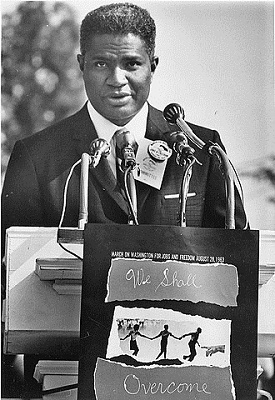
Ossie Davis



December 18
Ossie Davis was a towering figure in American film, theater, and television whose contributions went far beyond the stage and screen.
Born Raiford Chatman Davis on December 18, 1917 in Cogdell, GA, he grew up in the segregated South and later attended Howard University before launching his acting career. He adopted the name “Ossie” after a clerical error on a birth certificate became a lasting part of his identity.
Davis entered the world of theater at a time when roles for Black actors were limited and often steeped in stereotype, but he was determined to tell stories that reflected the full humanity of African Americans. His early work in the American Negro Theatre laid the foundation for a career that blended artistry with activism.
Davis made his Broadway debut in 1946 in Jeb, a play about a Black World War II veteran returning to the Jim Crow South. This early role set the tone for a career filled with performances that challenged injustice and illuminated Black experiences. Throughout the 1950s and 1960s, he appeared in both stage and film productions that centered dignity, complexity, and courage.
In 1961, Davis wrote and starred in Purlie Victorious, a sharp and satirical play that critiqued racism and segregation while celebrating Black resilience. His ability to write as powerfully as he performed made him a rare and influential voice in American theater.
In film and television, Ossie Davis brought quiet strength and depth to a wide range of roles. He appeared in films such as Do the Right Thing, Jungle Fever, Malcolm X, and Grumpy Old Men, building a legacy defined by versatility and integrity. His work with director Spike Lee in particular helped usher in a new era of Black cinema, one in which Davis became a respected elder statesman.
On television, he performed in dramas, comedies, and historical specials, always anchoring his characters with intelligence and purpose. Davis’s commanding presence made him both a storyteller and a symbol — representing the possibilities of Black excellence in American media.
Outside of his artistic achievements, Davis was a lifelong activist who used his platform to champion civil rights and social justice. Alongside his wife and creative partner Ruby Dee, he marched, spoke, and organized in support of racial equality, labor rights, and political freedom.
He eulogized both Malcolm X and Martin Luther King Jr., delivering words that continue to echo through history. Davis saw no division between his creative work and his activism; to him, the arts were a vital tool for change and consciousness-raising. His belief in the power of words, performance, and action defined every chapter of his life.
Ossie Davis’s impact on American culture is immeasurable. He helped shape a more honest and inclusive representation of Black life in the arts, while also taking an active role in shaping the society those arts reflected. Through his writing, acting, directing, and activism, he left behind a legacy of purpose, pride, and perseverance.
The work of Ossie Davis opened doors for countless others, and his commitment to truth and justice ensured that his voice would remain influential long after the final curtain.
* Photo of Ossie Davis speaking at the Civil Rights March On Washington
