
July 5 …
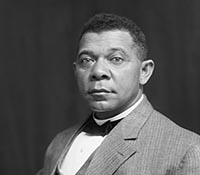
James Edward Shepard, a businessman and philanthropist, established the National Religious Training School and Chautauqua for the Colored Race — which later became North Carolina Central University — in Durham, NC on July 5, 1910.
Listen to this story:
Founded during the height of the Jim Crow era, the institution was created to provide African Americans with educational opportunities that combined academic instruction, vocational training, religious education, and leadership development. Through Shepard’s vision and determination, the school became one of the most influential institutions of higher learning for African Americans in the South and eventually evolved into North Carolina’s first publicly supported liberal arts college for Black students.
The university’s founding was closely tied to the growth of Durham’s Black community in the late 19th and early 20th centuries. Shepard, a Durham native and Shaw University graduate, envisioned an institution that would train ministers, teachers, business leaders, and skilled workers while advancing racial progress through education. He secured support from prominent Black leaders, local churches, and community members, who contributed funds and labor to establish the school.
The institution officially opened on July 5, 1910 on a 70-acre tract in Durham. Its original curriculum included Bible studies, teacher preparation, domestic science, agriculture, and industrial education. Unlike many Black schools of the period that focused primarily on vocational instruction, Shepard also emphasized a liberal arts education and civic leadership.
During its early years, the National Religious Training School expanded steadily despite limited financial resources. In 1923, the State of North Carolina appropriated funds to support the institution, making it the nation’s first state-supported liberal arts college for African Americans.
Reflecting its changing status, the school was renamed the Durham State Normal School and, in 1925, North Carolina College for Negroes. Under Shepard’s leadership, the college broadened its academic offerings and strengthened faculty credentials, becoming a leading center of Black higher education.
In 1947, the institution became the first publicly supported liberal arts college for African Americans to receive accreditation from the Southern Association of Colleges and Schools. In 1969, it adopted its current name, North Carolina Central University.
North Carolina Central has educated generations of leaders in law, politics, education, science, and the arts. Distinguished alumni include:
- Floyd McKissick (1951) — National director of the Congress of Racial Equality (CORE);
- Eva Clayton (1955) — First African American woman elected to Congress from North Carolina; and
- André Leon Talley (1970) — Fashion journalist, stylist, author, and former creative director of Vogue magazine.
Today, the university enrolls about 8,000 students and offers undergraduate, master’s, professional, and doctoral degrees. Programs in business administration, criminal justice, nursing, education, public health, biology, and information technology are among the university’s most popular fields of study. Recent curricular innovations include expanded programs in data science, biotechnology, cybersecurity, and health informatics, underscoring the institution’s commitment to preparing students for emerging professions.
Since its founding in 1910, North Carolina Central University has awarded tens of thousands of degrees and remains a cornerstone of higher education in North Carolina. Its legacy reflects James E. Shepard’s belief that educational opportunity, intellectual achievement, and public service could serve as powerful instruments of individual advancement and community transformation.
Selected Sources:
- Shepard, James E. The History of the National Religious Training School and Chautauqua for the Colored Race. Durham, NC: National Religious Training School Press, 1915.
- Smith, John Hope Franklin. The History of North Carolina Central University. Durham, NC: North Carolina Central University Press, various editions.
- Spruill, Albert W. North Carolina Central University: A History, 1910–1983. Durham, NC: North Carolina Central University Foundation, 1983.
- Powell, William S., ed. Encyclopedia of North Carolina. Chapel Hill: University of North Carolina Press, 2006.