

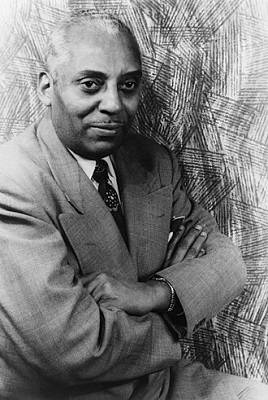
Noble Sissle
July 10 …
Noble Sissle was a pioneering composer, lyricist, bandleader, and singer whose work helped shape the sound and spirit of early 20th-century American music.
Born on July 10, 1889 in Indianapolis, IN, Sissle grew up in a religious and musically inclined family, where he was exposed early to the power of song as both art and communication. He attended DePauw University, where his talents as a vocalist and lyricist began to flourish. His musical interests led him to the vibrant world of ragtime and jazz, genres that were redefining American music. What set Sissle apart was his belief that African American music could reach new artistic heights when presented with dignity and sophistication — an idea he would carry throughout his remarkable career.
Sissle’s life changed in 1915 when he met pianist and composer Eubie Blake, forming one of the most influential partnerships in the history of American popular music. Together, they began performing as a vaudeville duo, bringing refinement and wit to stages that had long relied on minstrel stereotypes. Their collaboration reached new heights with the Broadway musical Shuffle Along (1921), one of the first shows written, produced, and performed entirely by African Americans. The production was a groundbreaking success, introducing audiences to new jazz rhythms and launching the careers of future stars such as Josephine Baker and Paul Robeson. Songs like “I’m Just Wild About Harry” became cultural touchstones, blending infectious melody with sophistication and charm. Shuffle Along not only changed the course of Broadway but also demonstrated the commercial and artistic viability of Black musical theater.
In the following short — an early sound film premiered at the Rivoli Theater in New York City on April 15, 1923 — Sissle and Eubie Blake perform some popular songs of the time including, Sons of Old Black Joe, My Swanee Home, Affectionate Dan, and All God’s Chillun.
Beyond the stage, Sissle was instrumental in elevating the status of Black musicians in America and abroad. During World War I, he served as a member of the band of the 369th Infantry Regiment — the famed Harlem Hellfighters — under the direction of James Reese Europe. The band introduced jazz to European audiences, sparking an international fascination with the genre and establishing its global influence. Sissle’s experiences overseas deepened his commitment to promoting African American music as a symbol of cultural pride and artistic excellence. His performances during and after the war served as an early bridge between American jazz and the world, laying the groundwork for its international acclaim.
In the years following Shuffle Along, Sissle continued to lead successful orchestras and compose music that blended elegance with the energy of jazz. His orchestra became one of the most respected Black bands of the 1920s and 1930s, performing in top venues and recording for major labels. Sissle was also a tireless advocate for professionalism within the Black entertainment community.
Sissle was elected the first president of the Negro Actors Guild of America, an organization dedicated to improving conditions and opportunities for Black performers. Through his leadership, he helped foster a spirit of unity and advancement that extended beyond the stage to the broader fight for racial equality in the arts.
Sissle’s legacy is one of innovation, integrity, and inspiration. His work helped define the early sound of American jazz and musical theater, bridging the gap between popular entertainment and high artistry. By combining musical brilliance with a deep sense of purpose, he showed that African American creativity was central — not peripheral — to the American story. His
The contributions of Noble Sissle paved the way for future generations of Black composers, lyricists, and performers to claim their rightful place in the nation’s cultural narrative. Through his music, leadership, and vision, Noble Sissle left an indelible mark on the evolution of American culture, reminding the world that art can be both beautiful and transformative.
