


Mary Eliza Mahoney

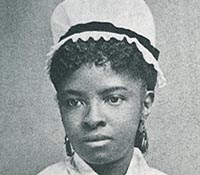


May 7 …
Mary Eliza Mahoney was a pioneering nurse, civil rights advocate, and trailblazer in American healthcare whose professional excellence and activism reshaped the role of African American women in medicine and public life.
Born on May 7, 1845 in Boston to parents who migrated north from North Carolina in pursuit of freedom and opportunity, Mahoney grew up in a community that championed education and abolitionist principles. As a teenager, she started her career at the New England Hospital for Women and Children, initially as a maid and later as a cook and washerwoman, all the while observing the nurses and physicians around her.
The hospital was one of the few establishments dedicated to training women in medicine and nursing. Surrounded by pioneering female physicians and reformers advocating for women’s opportunities, Mahoney cultivated the discipline and ambition that would characterize her career. In 1878, at the age of 33, Mahoney was accepted into the hospital’s demanding nursing program, where, out of 42 students, only four completed the curriculum.
In 1879, she made history as the first African American woman in the United States to attain a professional nursing license. The program required grueling 16-hour workdays and held high academic and clinical expectations. Mahoney’s success stood as a testament to her tenacity in overcoming both racial and gender obstacles.
Following her graduation, she primarily served as a private-duty nurse, gaining respect for her professionalism, efficiency, and unwavering adherence to standards. Her efforts played a crucial role in elevating nursing as a respectable profession during a time when it was still fighting to be acknowledged as skilled medical labor rather than merely domestic service.
Mahoney’s influence reached far beyond patient care. She emerged as a leading advocate for racial equality within the nursing field, boldly addressing discrimination that marginalized Black nurses from professional associations and job opportunities.
In 1908, she helped found — with Martha Minerva Franklin and Adah Belle Thoms — the National Association of Colored Graduate Nurses (NACGN), an organization committed to supporting Black nurses and advocating for equitable access to training and employment.
Among her allies in nursing reform were notable figures like Lavinia Dock and Isabel Hampton Robb, who were leaders in the wider movement to professionalize nursing, though mainstream organizations often excluded African American members. Mahoney’s leadership provided a vital counterbalance, ensuring that Black nurses had a unified voice.
Mahoney was also a supporter of women’s suffrage and one of the first women in Boston to register to vote following the ratification of the 19th Amendment in 1920, exemplifying her dedication to civic as well as professional advancement.
Throughout her life, Mahoney received recognition for her integrity and contributions. She was inducted into the American Nurses Association Hall of Fame and later into the National Women’s Hall of Fame, honors that celebrated her pioneering status and enduring influence on healthcare and civil rights.
In 1936, the American Nurses Association established an Award in her name, which continues to honor individuals who promote diversity and inclusion within the profession. These recognitions speak to the lasting impact of her work in forging pathways for nurses of color and reinforcing the ethical foundation of nursing practice.
Mahoney retired from nursing after decades of dedicated service and passed away on January 4, 1926. Her legacy endures through the professional standards she upheld, the organizations she helped establish, and the generations of nurses who followed in her footsteps. At a time when African American women faced deep-rooted discrimination in nearly every aspect of public life, Mahoney carved out a place of distinction in American medicine and utilized her success to advocate for broader societal change.
Today, Mary Eliza Mahoney is remembered not just as the first professionally trained Black nurse in the United States, but also as a transformative figure whose life contributed to redefining healthcare, expanding civil rights, and enriching the moral and cultural fabric of American history.
