Margaret Santiago


October 22 …
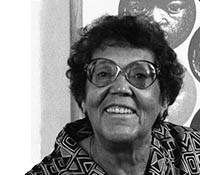
Margaret Santiago was a groundbreaking museum professional whose work significantly advanced both the internal practices of American museums and the broader cultural recognition of Black history and heritage.
Born in Spartanburg, SC on October 22, 1931, Santiago embarked on her career at the Smithsonian in 1960 as a clerk typist, quickly setting herself apart with her diligence and expertise in collections management. During an era when African Americans were largely excluded from leadership positions in national cultural institutions, she advanced to become the supervisor of accessions and specimen control.
In 1977, she made history as the first African American to hold the title of registrar at any major scientific museum in the country, placing her at the forefront of managing and preserving extensive collections of specimens and artifacts, while ensuring their documentation, care, and accessibility for research and public education. With this achievement, Santiago shattered barriers during a time when Black women faced significant limitations in cultural institutions.
Her distinguished career of over three decades at the Smithsonian’s National Museum of Natural History included essential contributions to professional networks that enhanced museum engagement with African American culture and communities. Santiago’s work was influenced by the social movements of her time, notably the Civil Rights Movement, which advocated for equality and representation across all sectors of American life.
As Black Americans sought a more inclusive narrative of national history, Santiago exemplified professional excellence in a field that had long marginalized people of color. Inspired by the leadership of her contemporaries in museums and cultural heritage, and working alongside other trailblazing Smithsonian professionals, she demonstrated that diversity in museum expertise enriches scholarship and public understanding. Her peers and successors in museum registrars and collections care have continued to uphold her ideals of precision, integrity, and inclusion.
In addition to her influential role at the Smithsonian, Santiago was a charter member of the African American Museums Association, now known as the Association of African American Museums. Founded in the late 1970s, this organization was established to support Black museum professionals and institutions dedicated to African American history and culture, creating a vital network for advocacy, professional development, and the promotion of African American cultural heritage across the nation.
Santiago’s involvement elevated the visibility of Black museum work and fostered stronger collaboration among institutions serving diverse audiences. While Santiago may not have received a long list of mainstream awards, her career itself stands as a testament to groundbreaking achievement and professional excellence.
Santiago chaired the Smithsonian Institution’s Women’s Council in 1981, championing the advancement of women throughout the institution. Her influence persists through the generations of museum professionals she mentored and the enhanced infrastructure of African American museum networks.
Even after her retirement in 1991, the legacy of Margaret Santiago endures in the ongoing efforts to ensure that museums reflect the full scope of American history and culture — a vision she helped instill through her pioneering work.