

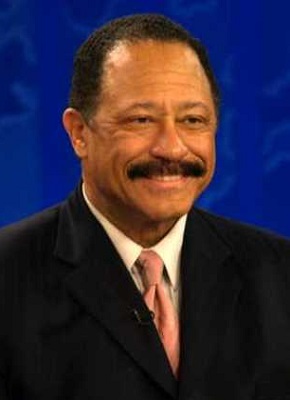
Judge Joe Brown
July 5 …
Judge Joe Brown is a former lawyer and judge whose public-facing courtroom work — first in Tennessee and later through his long-running syndicated television program — helped popularize a high-visibility, settlement-and-accountability style of justice while making everyday legal disputes part of mainstream entertainment and conversation.
Born Joseph Blakeney Brown Jr. on July 5, 1947 in Washington, DC and raised in South Central Los Angeles, Brown pursued his studies in political science at the University of California, Los Angeles (UCLA), where he also obtained his Juris Doctor from UCLA School of Law. During his time in law school, he worked as a substitute teacher and was affiliated with Alpha Phi Alpha fraternity.
Following his graduation from law school, Brown relocated to Memphis, TN. There, he began his legal career, which involved positions in Legal Services and the Equal Employment Opportunity Commission (EEOC), establishing himself as a significant figure in the city’s public-service landscape before entering elected judicial office.
Brown’s contributions to American law and criminal justice are marked by his roles as a prosecutor, public defender administrator, and Shelby County criminal-court judge. In 1978, he made history as Memphis’s first African-American prosecutor, later leading the Memphis public defender’s office and subsequently launching his own private practice.
In 1990, Brown was elected as a judge on the State Criminal Court of Shelby County. Renowned for his innovative sentencing approaches that focused on rehabilitation and personal accountability, he garnered national attention for his courtroom philosophy. This visibility increased in 1998 when he presided over the reopened James Earl Ray case related to the assassination of Martin Luther King Jr. Although he was later removed from the case due to allegations of bias, the event played a significant role in demonstrating the intersection of televised legal celebrity and contentious post-conviction litigation in American public life.
Brown’s influence extended into television, entertainment, and culture, particularly through Judge Joe Brown, a reality courtroom show that presented actual disputes and highlighted his commanding courtroom presence and “tough-love” approach. This series transformed the legal process into a daily spectacle for millions. Additionally, his appearances on mainstream media, such as Nightline, helped bridge his judicial persona to national celebrity.
Brown’s methodology shaped public perceptions of courtroom dialogue, stressing directness, moral framing, and practical outcomes, while mirroring the late 20th century and early 21st century audience’s appetite for legal drama that felt more immediate than scripted fiction. In today’s context, he served as a cultural intermediary between formal legal institutions and the broader public, publicly discussing issues related to criminal justice, education, family, and the legacies of the civil rights era, effectively linking law to larger civic discussions.
Brown has received recognition for justice-oriented advocacy, such as an “Advocate for Justice Award” from the Olender Foundation and Kennedy Center.
Together, the careers of Judge Joe Brown in prosecution and adjudication, amplified by national television, have made a lasting mark on how many Americans talk about courts — turning legal accountability into popular culture, while keeping the broader tension between entertainment, fairness, and the realities of the justice system in public view.
