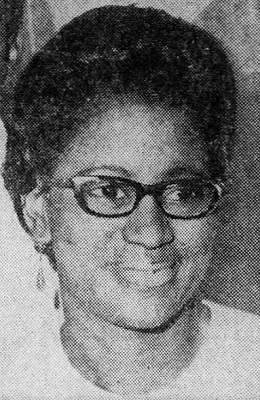
Juanita Abernathy


September 1 …
Juanita Abernathy was a central figure in the American Civil Rights Movement whose leadership, resilience, and advocacy helped shape the struggle for racial equality and social justice in the United States.
Born Juanita Odessa Jones on September 1, 1931 in Uniontown, AL, Abernathy grew up in the deeply segregated South, where she experienced firsthand the stark realities of racial injustice that shaped her early worldview. She attended Alabama State College (now Alabama State University). While there she focused on business education, and became immersed in the intellectual and social movements that would ignite the Civil Rights Movement.
It was at Alabama State that Jones met her future husband, Ralph David Abernathy, marrying him in 1952. Her upbringing in a religious, community-oriented environment, coupled with her exposure to systemic inequality, laid the groundwork for her lifelong dedication to activism and justice.
Abernathy gained prominence during the Montgomery Bus Boycott, working alongside her husband and leaders like Martin Luther King Jr. She played a vital role in organizing and providing moral support, coordinating carpools, meetings, and communication networks that sustained the boycott for over a year.
Beyond logistics, Abernathy emerged as a steadfast and public figure in the movement, often hosting gatherings in her home despite facing threats and acts of violence. Her bravery, particularly during the bombing of her home, highlighted her unwavering commitment. Over time, she became a respected leader in her own right, advocating for nonviolent resistance and community solidarity.
Throughout her career, Abernathy collaborated closely with notable contemporaries, including Coretta Scott King, Rosa Parks, Andrew Young, and John Lewis, creating a tight-knit network of activists dedicated to advancing the movement. Drawing inspiration from the nonviolent philosophy espoused by Martin Luther King Jr. and her husband, she helped integrate these ideals into community organizing and family life, emphasizing the critical role women played in maintaining the movement’s momentum.
Though Abernathy received less public recognition than some of her peers, she mentored younger activists and community members, particularly women, encouraging leadership rooted in faith, courage, and perseverance. Her work also intersected with broader social justice efforts, addressing voting rights, education, and economic equality.
Abernathy’s contributions were acknowledged through numerous honors and accolades throughout her life. She co-authored the memoir Partners to History: Martin Luther King Jr., Ralph David Abernathy, and the Civil Rights Movement, preserving firsthand accounts of key events. She received accolades from civic and historical organizations recognizing her role in advancing civil rights and safeguarding its legacy, remaining active in commemorative efforts well into her later years.
Juanita Abernathy died on September 12, 2019. She left a legacy deeply woven into American history, as her steadfast activism continues to inspire conversations about justice, equality, and the enduring power of collective action.