


June 3 …
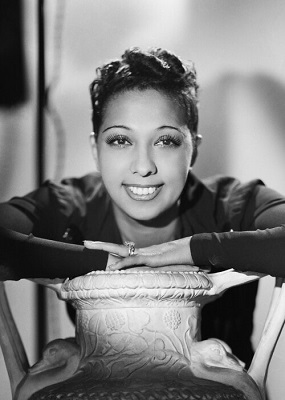
Josephine Baker was an American-born dancer, singer, and actress whose career was centered primarily in Europe, mostly in France.
Baker was born Freda Josephine McDonald on June 3, 1906 in St. Louis, MO into a world that offered few opportunities for a young Black woman with big dreams. From an early age, she found solace and purpose in performance, dancing on the streets and in local theaters to help support her family.
The hardships of Baker’s youth — marked by poverty, racial prejudice, and instability — shaped her resilience and fueled her determination to rise above the limitations imposed by society. By her teenage years, she had joined a traveling vaudeville troupe, setting the stage for a career that would transcend borders and defy expectations.
Baker’s early performances in America coincided with the Harlem Renaissance, a flourishing of Black art and culture during the 1920s. She became known for her comedic timing, expressive dance, and uninhibited energy, which captivated audiences in New York. However, despite her growing talent, she encountered the persistent racism that permeated the entertainment industry.
Frustrated by these barriers, Baker accepted an invitation to perform in Paris in 1925 — a decision that would change her life forever. In France, she found both fame and freedom, quickly becoming one of Europe’s most celebrated entertainers.
Baker’s performances in Paris were revolutionary, blending African rhythms, jazz, and modern dance in ways that challenged Western ideas about race and femininity. The iconic image of Bakerher dancing in a skirt made of bananas became a symbol of her boldness and the complex interplay between exoticism and empowerment.
While some viewed Baker’s act as controversial, others recognized it as a subversive commentary on colonial stereotypes and a celebration of Black identity. Her charisma and innovation made her a sensation in Europe, turning her into the first Black woman to become an international superstar.
Beyond her artistic triumphs, Baker’s life was defined by courage and conviction. During World War II, she joined the French Resistance, using her fame and access to gather intelligence for the Allies. She smuggled coded messages written in invisible ink on her sheet music and transported sensitive documents across borders under the guise of performing.
For her bravery, Baker received the Croix de Guerre and the Legion of Honour, two of France’s highest military decorations. Her wartime service revealed another side of her — not just a performer, but a patriot and a humanitarian committed to justice and equality.
After the war, Baker used her influence to fight racial discrimination, particularly in the United States. Returning to America in the 1950s, she refused to perform for segregated audiences and became active in the Civil Rights Movement.
Baker was a vocal supporter of Martin Luther King Jr., and in 1963, she spoke at the March On Washington, wearing her French military uniform to symbolize solidarity and service. She also adopted 12 children from different countries — her “Rainbow Tribe” — as part of her vision to show that racial harmony was possible. Through her life and choices, she embodied the idea that art could be a force for social change.
Baker’s legacy endures as that of a trailblazer who transformed entertainment and challenged the boundaries of race, gender, and nationality. She was not only a performer of extraordinary talent, but also a woman of profound principle and courage. Her influence can be seen in the generations of artists who followed her path — those who used the stage as both a platform for expression and a tool for progress.
In 2021, Josephine Baker was posthumously inducted into the Panthéon in Paris, becoming the first Black woman to receive this honor. Her life remains a testament to the power of resilience, creativity, and the unwavering pursuit of freedom.
