June 19 …
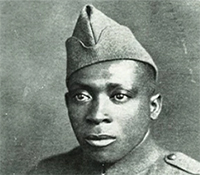
Smokejumper Joe Harris — believed to be the oldest surviving WWII paratrooper — was among the last surviving members of the U.S. Army’s first all-Black parachute infantry battalion.
Born on June 19, 1916 in the small town of West Dale, LA and raised in the South during a time of racial segregation and societal hardship, Harris’ sense of duty to his country developed early. When World War II broke out, he felt a deep calling to serve.
In 1941, at the age of 24, Harris enlisted in the U.S. Army, joining the newly-formed 555th Parachute Infantry Battalion, a historic and pioneering unit that was the first all-Black airborne regiment in American history. While many saw his enlistment as a courageous act of patriotism, for Harris, it was also a chance to prove that African American soldiers were just as capable and brave as any others in the fight for freedom.

Members of the battalion are briefed before takeoff from Fort Dix, NJ in 1947. The all Black airborne unit in World War II became one of the first smoke jumping units in U.S. Department of Agriculture Forest Service. (Photo courtesy of National Archives and Records Administration.)
In 1944, the battalion was deployed to the Pacific Theater, where they faced a unique mission unlike anything other airborne units experienced. While the 555th was trained for combat, their most famous operation became their role in combating forest fires caused by Japanese balloon bombs. These bombs, launched from Japan, were aimed at starting wildfires in the American Pacific Northwest, and the 555th was called in to help contain the blazes. This firefighting mission in 1945 became one of the most notable aspects of their service, showcasing their ability to adapt to unconventional wartime challenges.
However, it was in the latter part of the war, during 1945, when Harris’ resolve as a paratrooper was truly tested. The 555th spent time training and preparing for potential combat jumps into the Japanese-held islands in the Pacific. While they were never required to execute a major combat operation, the regiment’s readiness and commitment to the war effort did not go unnoticed.
Their courage and capability earned them respect within the broader airborne community, including soldiers from more widely recognized units like the 82nd Airborne Division. Harris’ role in these operations highlighted his dedication to the mission and his fellow soldiers, even if they were not directly involved in the large-scale airborne assaults that defined the war in Europe.
After the war ended, Sgt. Harris returned to the United States and settled into civilian life. He went on to live a quiet life in Louisiana, where he never sought the spotlight but remained proud of his service.
The Triple Nickles was not officially recognized for their contributions until years later, but Harris, like many of his comrades, quietly carried the weight of their extraordinary legacy. As one of the last surviving members of the 555th, he became a living reminder of the sacrifices made by African American soldiers during World War II, a group that faced not only the brutalities of war, but also the trials of racial discrimination in a segregated military.
Harris died on March 15, 2025 at the age of 108, leaving behind a legacy of courage, service, and resilience. His death marked the loss of one of the last remaining members of the 555th Parachute Infantry Battalion, and with it, a piece of living history. His service — which contributed to the broader success of World War II — would forever be remembered.
The life of Joe Harris, marked by pivotal moments in history, serves as a reminder of the immense courage of those who fought in World War II, particularly the paratroopers who jumped into harm’s way to secure a future of freedom for the world.