

August 20 …
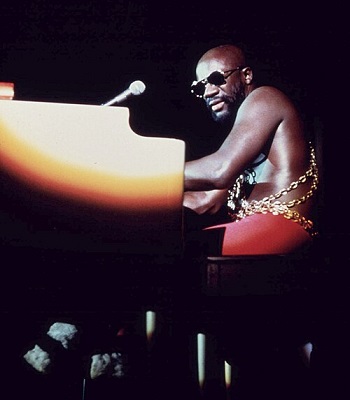
Isaac Hayes was a transformative force in American music and popular culture, a composer, singer, producer, and actor whose innovative fusion of soul, orchestration, and cinematic storytelling helped define the sound of the 1970s and expand the reach of Black artistry in film and entertainment.
Born on August 20, 1942 in Covington, TN, Hayes was raised in Memphis following the untimely deaths of his parents. He was brought up by his grandparents and found early solace in music, teaching himself to play the piano, organ, flute, and saxophone. Although he left high school before graduating, he later earned his diploma and briefly attended Manassas High School in Memphis, where he immersed himself in gospel traditions and the foundational elements of blues that would shape his musical style.
Hayes began his professional journey at Stax Records in the early 1960s, working as a session musician before forming a groundbreaking songwriting partnership with David Porter. Together, they created a series of hits for artists like Sam & Dave, including classics like “Soul Man” and “Hold On, I’m Comin’,” which became anthems that defined the Southern soul sound.
Working alongside contemporaries like Otis Redding, Carla Thomas, and Booker T. Jones, Hayes developed a lush, orchestrated sound that combined gospel passion with a cinematic flair. As a solo artist, he broke new ground with ambitious albums like Hot Buttered Soul, where his extended tracks and deep baritone challenged radio norms and redefined the essence of soul music.
Hayes garnered international acclaim in 1971 with the film Shaft, for which he composed the iconic theme and score. The “Theme from Shaft” won him the Academy Award for Best Original Song in 1972, making him one of the first African American composers to achieve this honor in a competitive category. It also earned him Grammy Awards, solidifying his status as a cultural icon.
The film’s success placed Hayes at the forefront of the Blaxploitation movement, where his music provided a powerful, contemporary soundtrack to narratives of Black empowerment and urban life. In addition to his musical accomplishments, he ventured into acting, appearing in numerous films and television shows, and later voiced the character Chef on the animated series South Park, introducing his distinctive persona to a new generation.
Influenced by gospel traditions, blues legends, and artists like Ray Charles and Nat King Cole, Hayes crafted a persona that blended musical sophistication with unabashed Black pride. His influence extended across genres, inspiring later artists in R&B, funk, and hip-hop. His work has been sampled and celebrated by a multitude of performers, while he mentored musicians looking to merge social awareness with commercial success.
Throughout his life, Hayes received numerous Grammy Awards, was inducted into the Rock and Roll Hall of Fame as a songwriter with the Stax team, and was honored for his philanthropic efforts.
By the time of his passing in 2008, Isaac Hayes had established a legacy not only as a hitmaker, but as a cultural architect whose songs and soundtracks redefined American music, film, and identity.