

December 11 …
The Houston Riot Tribunals were the result of the 1917 Houston Riot — also known as the Camp Logan Mutiny — a profound and tragic flashpoint in American history in which racial injustice, military discipline, and Jim Crow–era violence collided with devastating consequences for U.S. society and its evolving struggle for civil rights.
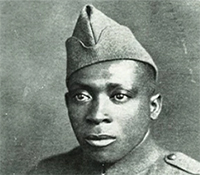
In August 1917, a group of 156 Black soldiers from the all-African-American 3rd Battalion of the 24th Infantry Regiment, known as the Buffalo Soldiers, marched from their base at Camp Logan toward downtown Houston. This action was in response to ongoing harassment and brutality from the all-white Houston Police Department and local civilians.
After months of racist taunts and assaults, an incident in which police officers brutally beat and arrested two Black servicemen intensified tensions, leading to rumors of an approaching white mob. In the charged atmosphere of segregation, the soldiers seized their rifles and entered the city, igniting a chaotic gunfight that resulted in 19 deaths, including five policemen and several civilians, along with fatalities among the soldiers.
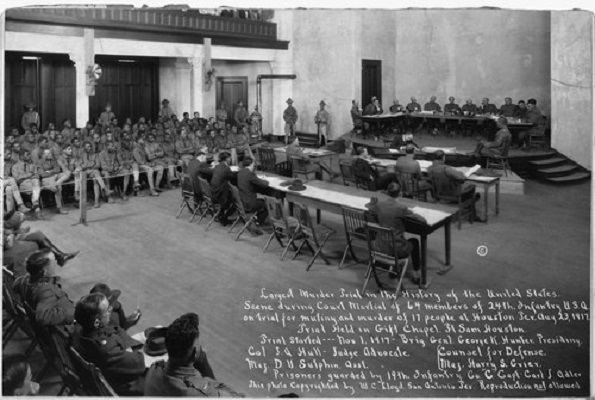
In the aftermath of the violence, military authorities quickly imposed martial law in Houston and arrested the mutineers. Between November 1917 and March 1918, three separate courts-martial were convened at Fort Sam Houston in San Antonio to try 118 battalion members on charges that included mutiny, murder, and assault.
These proceedings marked the largest murder trial in U.S. history — one that is now considered to have been unjust.
In the first tribunal, 13 men were convicted and hanged within a day of their sentencing. Their executions were carried out on the morning of December 11, 1917, less than 24 hours after sentencing in a rushed court-martial with no opportunity for appeal, and represented one of the largest mass executions in U.S. Army history.
Subsequent executions of six men in 1918 were part of later courts-martial after procedural changes allowed for review of death sentences. By the end of the trials, a total of 110 soldiers had been convicted, of which 63 were found guilty and sentenced to life imprisonment. The military justice system’s decisions were heavily influenced by the racism of the era and lacked meaningful appellate protections for the defendants.
The rapid trials and convictions became a lasting blemish on U.S. military justice and race relations. Notably, no white civilians or police officers faced charges related to the events that triggered the mutiny. Advocates have argued that the soldiers received much harsher punishment than the systemic mistreatment they experienced.
Over the years, historians, civil rights organizations, and legal scholars have debated the implications of the riot, with some viewing the soldiers’ actions as an unlawful mutiny, while others saw them as an act of desperate resistance against racial terror. The riot underscored the broader challenges faced by African-American servicemen during World War I, who were expected to fight for democracy abroad while enduring segregation and violence at home.
It also contributed to the growing momentum of wartime racial activism and calls for justice that resonated through the Great Migration and later civil rights movements.
The legacy of the Riot continued to evolve into the 21st century. In November 2023, after more than a century, the U.S. Army Board for Correction of Military Records formally set aside all 110 convictions, acknowledging the soldiers’ denial of fair trials due to pervasive racial prejudice and the fundamental flaws in the legal proceedings.
The Secretary of the Army endorsed the recommendations to recharacterize the servicemen’s military records as honorable, granting them honorable discharges in a significant step toward rectifying a long-standing miscarriage of justice. While this act did not erase the violence of 1917, it represented an institutional acknowledgment of the profound injustices that shaped the aftermath of the riot and its lasting effects on the families and communities of the Buffalo Soldiers.
Historically, the Riot has had widespread cultural and social ramifications. It exemplifies how racial discrimination and the denial of basic civil liberties can erode trust between minority communities and law enforcement or military authorities. The incident has become the focus of scholarship, public history initiatives, and cultural memory in Texas and beyond, highlighting how African-American soldiers’ service has often been met with suspicion and punishment rather than honor.
The Riot also sparked vital conversations about military justice reform. This led to procedural changes that eventually laid the groundwork for appellate review within the Army’s legal system, even as it underscored the urgent need for racial equity.
In American historical memory, the 1917 Houston Riot serves both as a cautionary tale and as a testament to the ongoing struggle for social justice. Its implications extend into discussions of race, military authority, and citizenship in the United States, reminding successive generations of the deep impact that segregation and prejudice have had on national institutions.
The posthumous restoration of honor to the Buffalo Soldiers — unjustly convicted during the Houston Riot Tribunals — and ongoing public education efforts about this event emphasize its significance not just as a moment of violent confrontation but as a catalyst for reflection on American values, national identity, and the enduring pursuit of reform that continues to shape American society and history.
