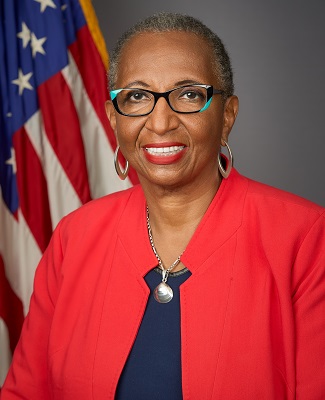
Gwynne Wilcox

April 27 …
Gwynne A. Wilcox is a distinguished labor attorney and the first Black woman to serve on the National Labor Relations Board (NLRB).
Born on April 27, 1952 in New York City, Wilcox has forged a distinguished path in American labor law, leaving a lasting imprint on the landscape of workers’ rights and labor policy. With decades of experience as a labor attorney, Wilcox rose to prominence through her work representing unions and advocating for collective bargaining rights.
Her appointment to the National Labor Relations Board (NLRB) marked a historic moment — not only as a recognition of her expertise but also as a breakthrough for representation, as she became the first Black woman to serve on the Board. Her presence has helped redefine the parameters of labor law discussions, especially in an era of evolving workplace norms and increased scrutiny of labor practices.
Wilcox earned her Bachelor of Arts from Syracuse University and a Juris Doctor from Rutgers University School of Law-Newark, and throughout her career, she has remained a steadfast advocate for workers, particularly focusing on the needs of marginalized communities and industries where labor abuses are most entrenched. Her legal acumen was honed at the firm Levy Ratner, where she championed the rights of health care workers, janitors, and other essential personnel whose voices have often been underrepresented.
Her work has involved complex labor disputes, contract negotiations, and litigation, all underpinned by a commitment to ensuring fairness in the employer-employee relationship. Through her practice, Wilcox has played a crucial role in shaping how labor rights are asserted and defended in both traditional workplaces and newer employment models.
On the NLRB, Wilcox brought a pragmatic and progressive perspective to interpreting and applying federal labor laws. Her judgments often emphasized the importance of collective action and workplace democracy, particularly at a time when organized labor is resurging in visibility and public support.
Wilcox consistently supported efforts to modernize labor protections and to make unionization processes more accessible and equitable. Her tenure on the Board reflected a careful balance between legal precedent and the need to adapt the law to a changing economic and technological environment, including the rise of gig economy labor and remote work structures.
Beyond her professional achievements, Wilcox has contributed significantly to American society through mentorship and public engagement. She has been a role model for aspiring lawyers of color, particularly Black women, and has actively participated in initiatives aimed at increasing diversity and inclusion in the legal profession.
Wilcox has spoken widely on the intersection of race, labor, and law, encouraging institutions to examine systemic barriers and take deliberate steps toward equity. Her influence extends beyond the courtroom and the boardroom, touching the educational and policy-making arenas where future legal frameworks are formed.
In the broader context of American history, Wilcox represents a continuity of the labor movement’s enduring struggle for justice and dignity. Her career reflects the evolution of labor rights from industrial-age battles to 21st-century complexities involving technology, globalization, and social justice.
Through her work, Gwynne Wilcox has not only shaped the legal contours of labor relations but also reaffirmed the fundamental democratic ideals of participation, equity, and voice in the workplace. As such, she stands as both a legal trailblazer and a civic leader whose legacy will continue to inform labor policy and inspire future generations.