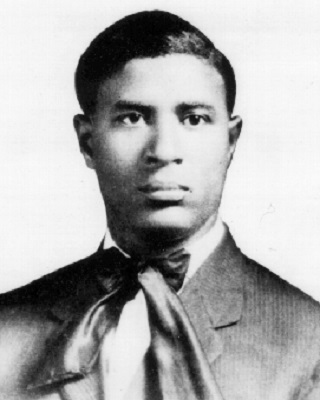
Garrett Morgan


March 4 …
The life and work of Garrett Morgan has left an enduring impact on American industry, public safety, and innovation.
Born on March 4, 1877 in Paris, KY to formerly enslaved parents, Morgan grew up in the post-Reconstruction South where he had limited access to formal education and opportunities, but he demonstrated an early aptitude for mechanical work and problem-solving. In his teenage years, he moved north to Cincinnati, OH and later to Cleveland, where he would begin to forge a remarkable career as an inventor, entrepreneur, and community leader.
Morgan began his professional life as a sewing machine repairman, a job that revealed his skill with intricate machinery. He eventually opened his own repair business and later a tailoring shop with his wife. During this time, he invented a revolutionary zigzag stitching attachment for sewing machines, which increased efficiency and helped establish his reputation as a creative thinker and businessman. But his ambition extended beyond tailoring — he was determined to develop technologies that addressed pressing safety and public health issues of the time.
One of Morgan’s most important contributions came in 1912, when he invented a safety hood designed to protect wearers from smoke, gas, and fumes. This early version of a gas mask featured a simple yet effective system of tubes and filters to provide breathable air in hazardous environments.
Originally marketed to firefighters, the device gained national attention in 1916 when Morgan used it to rescue workers trapped during a tunnel explosion under Lake Erie in Cleveland. Despite racial prejudice that often obscured his achievements, the dramatic rescue brought him broader recognition and highlighted the life-saving potential of his invention.
Morgan’s other major innovation came in the realm of transportation. Witnessing the chaos and danger of early automobile traffic, he patented a three-position traffic signal in 1923. Unlike previous stop-and-go systems, Morgan’s version introduced a “caution” signal, helping reduce accidents by allowing drivers time to slow down before stopping. This invention laid the groundwork for modern traffic light systems and demonstrated his foresight in creating infrastructure solutions that improved safety for all.
Throughout his life, Morgan faced racial discrimination that often limited his commercial success and public recognition. To sell his inventions to a broader market, he sometimes had to use white intermediaries or downplay his identity as a Black inventor. Despite these obstacles, he continued to build a legacy of innovation and perseverance, using his business success to support Black communities in Cleveland. He co-founded a newspaper, The Cleveland Call, to give voice to African American perspectives and was active in civic and social organizations.
Morgan’s life and work were deeply intertwined with the broader struggles and progress of African Americans in the early 20th century. He embodied the spirit of Black ingenuity during a time of profound inequality, proving that creativity and intelligence could break through even the most entrenched barriers. His inventions improved public health and safety, and his business acumen created opportunities not only for himself but for others in his community.
Garrett Morgan remains a model of how one individual’s commitment to solving real-world problems can have a wide-reaching and lasting impact.