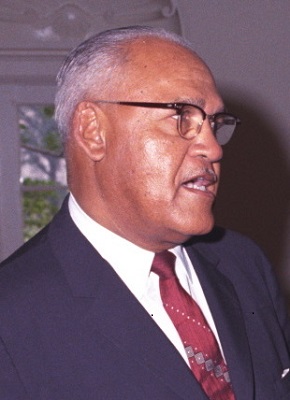
Frederick D. Patterson

October 10 …
Frederick D. Patterson was an educator, psychologist, and institutional leader who shaped mid-20th-century higher education, philanthropic support for Black colleges, and broader efforts for racial equality.
Born on October 10, 1901 in Washington, DC, Patterson was raised by his sister, after they lost both parents to tuberculosis. He initially obtained a B.S. from Arkansas Baptist College. He later trained in veterinary medicine, earning a Doctor of Veterinary Medicine (D.V.M.) from Iowa State College (now Iowa State University), before later earning an M.S. and then a Ph.D. in clinical psychology from the University of Minnesota. This made him one of the first African Americans to earn a doctoral degree in psychology.
Patterson’s education melded scientific rigor with a strong commitment to educational access. Early in his career, he engaged in teaching and research that integrated clinical psychology, public health concerns, and administration, effectively preparing him for leadership roles at Historically Black Colleges and Universities (HBCUs).
Patterson’s achievements are rooted in two significant legacies. As president of Tuskegee Institute — now Tuskegee University — from 1935 to 1953, he enhanced vocational and academic programs, and expanded fundraising efforts and campus facilities. He also established Tuskegee as a national benchmark for Black higher education.
In 1944, Patterson founded the United Negro College Fund, which revolutionized financial support for Historically Black Colleges and Universities by mobilizing resources from corporations, philanthropists, and the public, thereby significantly increasing scholarship opportunities for Black students. He also advocated for teacher training, health initiatives, and research programs aimed at enhancing socioeconomic conditions for African Americans.
Patterson’s contributions earned him numerous accolades, including presidential appointments and national awards in recognition of his service to education and civil rights. The milestones achieved at Tuskegee Institute and the UNCF remain central to his lasting legacy.
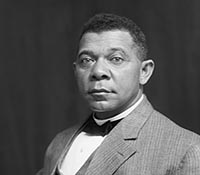
Patterson’s intellectual influences included educators and Black leaders who shaped early 20th-century strategies for racial progress. He navigated and reinterpreted the legacy of Booker T. Washington at Tuskegee, while engaging with contemporaries such as Mary McLeod Bethune and W.E.B. Du Bois in policy debates. Patterson collaborated with philanthropists and corporate leaders, including Julius Rosenwald and later corporate supporters of UNCF, to secure funding for Black education.
Patterson also mentored a generation of Black administrators and scholars who went on to lead HBCUs and nonprofit organizations. He was a member of Alpha Phi Alpha fraternity.
Patterson’s broader influence on American society revolves around institutionalizing sustainable support for Black higher education and connecting scholarship aid to long-term community development. By professionalizing fundraising, promoting research on Black health and education, and advocating for inclusion in national educational policies, he significantly transformed the infrastructure of opportunity for African Americans. The numerous awards, honorary degrees, and federal recognitions highlight a career that bridged academia, public service, and civil rights work.
The institutions Frederick D. Patterson fortified — especially UNCF and Tuskegee University — continue to influence educational access and social mobility in the United States today.