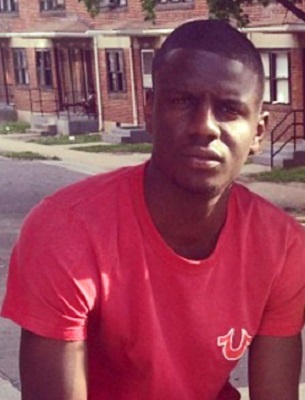
Freddie Gray

August 16 …
The death of Freddie Gray — while in police custody — became a major flashpoint in national conversations about policing, urban inequality, and justice in the United States.
Born on August 16, 1989, Gray was raised in Baltimore, particularly in neighborhoods shaped by long-standing economic hardship and limited access to resources. He grew up in public housing alongside his twin sister, surrounded by the harsh realities of poverty, lead contamination, and high incarceration rates that defined the lives of many residents. He was described as a quiet, yet personable individual, shaped by his environment, yet deeply connected to his community and family.
Gray attended local schools, but his educational journey was hindered by the challenges of his surroundings. He held various jobs in construction and service industries, striving to create stability and support himself. His life exemplified resilience in the face of structural barriers, reflecting the experiences of many young men navigating similar urban landscapes.
Gray’s personal accomplishments centered on maintaining family relationships, achieving self-sufficiency, and coping with the realities of his life. Over time, his story has come to symbolize broader systemic issues, including housing inequality, public health disparities, and the over-policing of marginalized communities. This context became crucial to the interpretation of his life and death.
On April 12, 2015, Gray was arrested by Baltimore police officers after he made eye contact and fled upon seeing them. He was placed in a police transport van, where he sustained a severe spinal cord injury while in custody.
After spending a week in a coma, Gray died on April 19, 2015. His death sparked widespread protests and unrest in Baltimore, capturing national attention. Six officers faced charges related to his death, but none were ultimately convicted. The incident led to investigations into the Baltimore Police Department, resulting in a federal consent decree aimed at reform.
For his family and community, the loss of Freddie Gray was profoundly personal, while nationally, his death became a pivotal event within the Black Lives Matter movement, igniting discussions about policing practices, accountability, and systemic inequality in American society.
About The Photo:
- Family photo of Freddie Gray published by the Baltimore Sun.