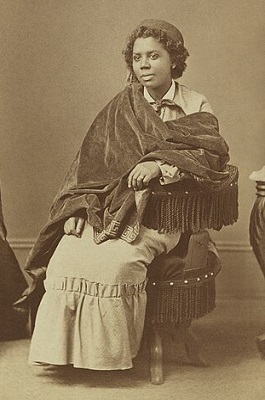
Edmonia Lewis
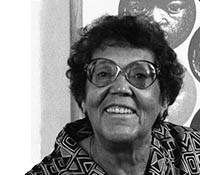
July 4 …
Edmonia Lewis was a groundbreaking 19th-century sculptor whose neoclassical works explored themes of freedom, identity, and human dignity, making her one of the first professional Black and Native American artists to achieve international recognition.
Born Mary Edmonia Lewis on July 4, 1844 in the Town of Greenbush (now part of Rensselaer), NY, she was the daughter of a mother of Ojibwe heritage and a father of African descent. After losing her parents in childhood, she lived with relatives in the Ojibwe community near the Great Lakes, where she cultivated a strong cultural identity and sense of independence.
Lewis’s educational journey took her to Oberlin College in Ohio, one of the few institutions at the time that welcomed both women and Black students. While there, she exhibited artistic talent, but faced racial hostility and unfounded accusations that led her to leave before completing her studies. Undeterred, she pursued her passion for art, relocating to Boston, where she honed her skills in marble carving under sculptor Edward Augustus Brackett.
In the early 1860s, Lewis gained recognition for her portrait medallions and busts of abolitionist leaders like John Brown and Robert Gould Shaw. The success of these works allowed her to move to Rome, a hub for expatriate American artists, where she joined a community of women sculptors, including Harriet Hosmer and Anne Whitney.
Distinctively, Lewis chose to carve her own marble rather than rely extensively on studio assistants, showcasing her technical prowess and resolve to be acknowledged as a serious artist. Her sculptures often explored themes of emancipation and spiritual resilience, exemplified by her renowned piece, The Death of Cleopatra, showcased at the Centennial Exposition in Philadelphia. Other works, such as Forever Free, expressed the emotional aftermath of slavery’s abolition in the United States.
Through her art, Lewis engaged with the cultural and political issues of her time, portraying African American and Indigenous subjects with dignity and individuality, a rarity in mainstream sculpture. She emerged alongside notable artists like Winslow Homer and Augustus Saint-Gaudens, with her career reflecting the influence of abolitionists and reformers whose ideals shaped her artistic vision.
Although Lewis did not receive the institutional accolades common in later artistic careers, her work was widely exhibited and esteemed during her lifetime. Many years thereafter, on February 1, 2017, she was honored with a Google Doodle, and on January 26, 2022, the U.S. Postal Service released a stamp in her honor.
In the years following her death in 1907 in London, the contributions of Edmonia Lewis gained recognition from scholars and museums, securing her place as a pioneering figure who expanded opportunities for women and artists of color while leaving an indelible mark on the history of American and international sculpture.