


E.J. Josey

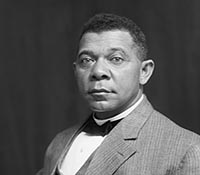
January 20 …
E.J. Josey was a pioneering librarian, educator, activist, and scholar whose lifelong commitment to equity transformed American librarianship and expanded the role of libraries as instruments of social justice and democratic access.
Born Elonnie Junius Josey on January 20, 1924 in Norfolk, VA, he grew up in the segregated South, an experience that profoundly influenced his perspective on racial inequality and the transformative power of education. After serving in an all-Black squadron of the U.S. Army, Josey earned his undergraduate degree from Howard University, a pivotal institution that fostered his intellectual growth and political awareness, followed by a master’s degree in library science from the State University of New York at Albany.
Entering the profession during a time when both libraries and professional associations were segregated, Josey was resolute in his mission to confront these exclusionary systems from within. He joined the American Library Association in 1952, but like other African American librarians, his application to the Georgia Library Association was rejected.
Josey’s most significant contributions came through his leadership in the fight against racial discrimination in professional library organizations.
In 1964, Josey successfully passed a resolution within the American Library Association that prohibited state library associations from maintaining segregated memberships, a landmark action that initiated integration throughout the profession. As a result of his protest against the Southern state library association and his successfully-implemented resolution, he became the first African American librarian of the Georgia Library Association in 1965.
Josey was a key leader — along with Effie Lee Morris and others — in the formation of the Black Caucus of the American Library Association, which formed in 1970. He was elected as the organization’s first chairman.
Josey further distinguished himself as the first African American elected president of the New York Library Association and, in 1984, served as president of the American Library Association. In these roles, he redefined librarianship as a profession with an ethical commitment to civil rights, intellectual freedom, and equitable access to information.
As an educator and scholar, Josey influenced generations of librarians through his teaching at institutions like Savannah State College, the University of Pittsburgh, and the University of Maryland. He authored and edited significant works that addressed racism in libraries, the social responsibilities of information professionals, and the history of Black librarians in America.
His scholarship asserted that libraries are not neutral spaces, but cultural institutions that embody societal values and must actively oppose injustice. This philosophy positioned him as a prominent advocate for aligning education and information access with democratic principles.
Josey was inspired and mentored by earlier pioneers in Black librarianship and education — including educator Clara Stanton Jones, a former president of the American Library Association — as well as scholars tied to the civil rights legacy of Howard Unversity. Among his contemporaries were influential figures such as Andrew P. Jackson, Ann Allen Shockley, and Sanford Berman, all of whom worked to redefine librarianship through activism, inclusive cataloging, and community engagement. Together, they drove the profession toward a more socially aware and representative future.
Throughout his career, Josey received numerous awards and honors recognizing his contributions to education, civil rights, and librarianship, including lifetime achievement awards from professional associations and honorary doctorates. Beyond formal recognition, his lasting legacy lies in the institutional changes he championed and the ethical framework he established for librarianship as a vehicle for equity.
E.J. Josey remains a pivotal figure in American cultural and educational history, remembered for his steadfast belief that access to knowledge is inextricably linked to the quest for justice.
