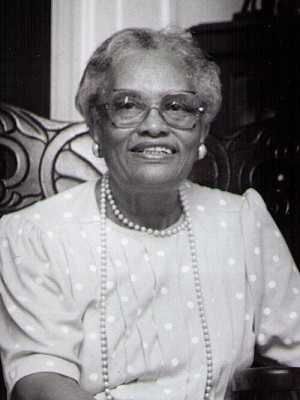
Dovey Johnson Roundtree

April 17 …
Dovey Johnson Roundtree was a pioneering attorney and civil rights activist who made significant contributions to American law, society, and history.
As one of the trailblazing Black women admitted to the bar in Washington, DC, Roundtree shattered barriers in the legal profession, using her platform to combat racial injustice and gender discrimination throughout her illustrious career.
Born on April 17, 1914 in Charlotte, NC, Roundtree grew up in the Jim Crow era, a time marked by pervasive racial segregation and discrimination. Driven to make a significant impact, she attended Shaw University, a historically Black institution,
A protégé of activist and educator Mary McLeod Bethune, Roundtree was selected by Bethune for the first class of African-American women to be trained as officers in the newly created Women’s Army Auxiliary Corps (later the Women’s Army Corps during World War II. She later earned her law degree at Howard University School of Law. There, she was inspired by professors deeply involved in the Civil Rights Movement, most notably Charles Hamilton Houston.
After completing her studies, Roundtree became one of the first Black women to be admitted to the Washington, DC bar. Her legal career was anchored in the mission to defend and uplift African American communities, and she gained a reputation for tackling cases that confronted the era’s systemic racism.
Roundtree’s most renowned and transformative work emerged through her involvement in various civil rights cases. She is especially recognized for representing African American women facing racial discrimination, particularly during World War II.
Her advocacy challenged oppressive practices within the military, including her representation of a group of Black women who were denied equal treatment in the Women’s Army Auxiliary Corps. Her efforts not only advanced the rights of Black women in federal institutions, but also resulted in substantial changes to military policy.
Roundtree represented clients in landmark cases addressing segregation in public accommodations and transportation, championing the desegregation of public spaces in the mid-20th century. On noted case was Sarah Louise Keys v. Carolina Coach Company, alleging that the company violated federal law by enforcing racial segregation on its buses. She and her partner successfully argued the case before the Interstate Commerce Commission, who ruled in their client’s favor.
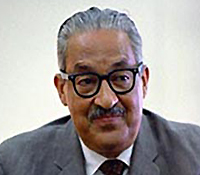
Throughout her career, Roundtree was guided and mentored by notable leaders in the Civil Rights Movement, including Thurgood Marshall, who would later become the first African American Supreme Court Justice.
She collaborated with contemporaries like A. Philip Randolph, Pauli Murray, and other prominent figures in the movement, all of whom acknowledged her legal expertise and commitment to justice. Furthermore, Roundtree was a mentor to a new generation of Black attorneys, urging them to leverage their legal education to challenge injustice.
In honor of her groundbreaking work, Dovey Johnson Roundtree received numerous accolades, including the National Bar Association’s prestigious Lifetime Achievement Award. Her legacy as a trailblazer in law and her unwavering commitment to racial and gender equality remain an essential chapter in the history of civil rights in America.