

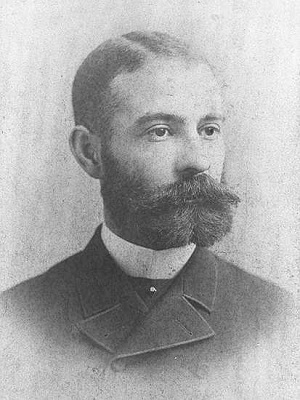
Daniel Hale Williams

January 18 …
Daniel Hale Williams was a pioneering American surgeon, hospital founder, and civil rights advocate whose achievements in medicine and institution-building reshaped the possibilities for African American professionals in the late 19th and early 20th centuries.
Best known for performing one of the world’s first successful open-heart surgeries and for founding a hospital that welcomed both Black physicians and patients, Williams combined clinical excellence with a profound dedication to social justice, leaving a lasting impact on American medical and cultural history.
Born on January 18, 1856 in Hollidaysburg, PA and partly raised in Chicago, Williams came of age during Reconstruction, a time of both opportunity and setbacks for African Americans. After apprenticing with a local physician, he pursued formal medical education at Chicago Medical College, earning his degree in 1883.
Williams established a medical practice in Chicago, quickly gaining respect for his skill and professionalism. Recognizing that professional excellence alone would not dismantle the structural barriers posed by racial discrimination limiting hospital access for Black doctors and patients, Williams understood the need for institutional innovation.
In 1891, he co-founded Provident Hospital and Training School for Nurses, the first Black-owned and interracially staffed hospital in the United States. Provident offered training for Black nurses and granted admitting privileges to Black physicians who faced exclusion elsewhere.
In 1893, at Provident, Williams performed a groundbreaking surgery to repair a stab wound to the pericardium, widely acknowledged as one of the earliest successful operations of its kind. His achievement showcased both surgical audacity and meticulous technique, enhancing his national and international reputation.
Through Provident, he established a professional pipeline that advanced African American participation in modern medicine.
Williams’s career intersected with prominent contemporaries and reformers. He collaborated with civic leaders like George Cleveland Hall and was connected with activists such as Ida B. Wells. He also maintained relationships with national figures supporting racial uplift, including Booker T. Washington, whose focus on institutional self-reliance echoed Williams’s approach to hospital development.
Later in his career, Williams served as chief surgeon at Freedmen’s Hospital — now known as Howard University Hospital — in Washington, D.C., further expanding training opportunities for Black medical professionals. He mentored younger physicians and nurses, exemplifying a standard of discipline and compassion that influenced generations.
Throughout his life, Williams received recognition from medical societies and civic organizations for his surgical accomplishments and leadership. He was a founding member and first vice president of the organization that is now the National Medical Association, which was formed in 1895 to support African American physicians excluded from white professional groups.
While formal accolades were constrained by the racial climate of his time, his stature among peers and the lasting impact of the institutions he helped establish serve as enduring testimonies to his contributions.
The legacy of Daniel Hale Williams transcends a single lifesaving operation; it encompasses the structures of opportunity he built, which not only advanced American medicine but also expanded the boundaries of equality and professional dignity.
