


Clifford Alexander Jr.


September 21 …
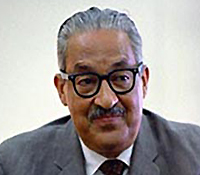
Clifford Alexander Jr. was an American lawyer, public servant, and business leader whose career spanned the Kennedy, Johnson, and Carter administrations and who made historic contributions to civil-service leadership and the advancement of racial and gender equity in the U.S. government.
Born on September 21, 1933 in Harlem, NY, Alexander graduated cum laude from Harvard University in 1955, where he became the first Black president of the Harvard Student Council. He earned his law degree from Yale Law School in 1958.
Early in his career, Alexander worked as an assistant district attorney in New York County, briefly served in the New York National Guard. He joined the federal government as a foreign affairs officer on the National Security Council during the Kennedy administration. This role positioned him uniquely at the crossroads of law, policy, and civil rights in the 1960s.
Alexander’s public achievements are vast, including his tenure as chairman of the Equal Employment Opportunity Commission from 1967 to 1969. Most notably, He was the first African American Secretary of the Army from 1977 to 1981 under President Jimmy Carter. As Secretary, he successfully navigated the Army through the transition to an all-volunteer force after the Vietnam War. He advocated for enhanced recruitment and retention strategies, emphasized professionalism and improved pay, and advanced opportunities for promotions among minorities and women.
His efforts also fostered minority contracting, creating meaningful career advancements for both military officers and civilian contractors. While doing that, he fostered important institutional standards for diversity and inclusion within the military.
Alexander’s influence and connections exemplified the mid-20th-century landscape of Black civic leadership. He collaborated with prominent figures such as A. Philip Randolph, Roy Wilkins, Whitney Young, and members of the circle around Martin Luther King Jr. in fostering policy discussions among Black leaders.
His contemporaries in government included Presidents John Kennedy, Lyndon Johnson, and Jimmy Carter, along with senior officials like Robert McNamara and Clark Clifford. His mentorship benefited military leaders such as Colin Powell, whose career he publicly supported, and inspired a generation of Black professionals.
Additionally, his family — wife Adele Logan Alexander, and children poet and scholar Elizabeth Alexander and Mark C. Alexander, a law professor and dean — continued his legacy of public service.
Alexander’s enduring honors and recognitions stem from the historic milestones and leadership positions he occupied. As the first Black Secretary of the Army and a former EEOC chair, he holds a significant place in civil service history. He later became a respected member of private-sector boards, including the Board of Governors of the American Stock Exchange, and provided legal counsel to various administrations while advising subsequent political leaders.
The career of Clifford Alexander Jr. garnered wide respect across governmental, legal, and civic domains for driving institutional reforms in hiring, promotion, contracting, and inclusivity, leaving a profound legacy acknowledged in obituaries, institutional histories, and the organizations he transformed.
