Cecil J. Williams


November 26 …
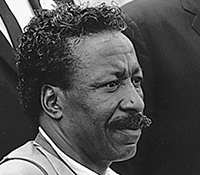
Cecil J. Williams is a renowned photographer, publisher, and civil rights activist whose body of work has captured pivotal moments in American history.
Born on November 26, 1937 in Orangeburg, SC, Williams developed an early interest in photography, receiving his first camera at age nine. By his teenage years, he was already freelancing for national publications, including Jet and Ebony magazines by Johnson Publishing Company, documenting the segregated South with a clarity and courage that set him apart from his peers. His unique position as a young African American photographer in the Jim Crow South allowed him to chronicle events and communities from within, producing images that were both intimate and historically significant.
Throughout the 1950s and 1960s, Williams was a quiet but persistent force in documenting the civil rights movement, particularly in South Carolina. His photographs offered a rare, behind-the-scenes look at local efforts that often went unnoticed by the national media. He documented critical events such as student protests, NAACP gatherings, and legal challenges to segregation.
Perhaps most notably, Williams was present during the events leading up to and following the Orangeburg Massacre in 1968, when three Black students were killed by police during a protest at South Carolina State College (renamed South Carolina State University in 1992). His images from that period are among the few visual records of a tragedy that has too often been overshadowed in civil rights history.
Williams’ approach to photography has always been rooted in a commitment to truth-telling and community empowerment. He didn’t merely observe the struggle for civil rights — he participated in it, often risking his own safety to document injustices. His work goes beyond the dramatic moments of protest to show everyday Black life in the South: children playing, families worshiping, professionals going about their lives with dignity and determination. These images challenge monolithic narratives and offer a fuller picture of African American experience during a transformative period in U.S. history.
In addition to his photography, Williams has played a significant role in preserving and promoting African American history through publishing and education. He founded Cecil Williams Photography/Publishing, through which he has released books, prints, and educational materials aimed at ensuring that the stories of civil rights activists and ordinary citizens alike are not forgotten.
Williams’ 2006 book Out of the Box in Dixie is both a memoir and a photo documentary that provides personal insights into the people and events he captured with his lens. Through this work, he has helped to fill gaps in the historical record, particularly regarding South Carolina’s role in the broader Civil Rights Movement.
Williams’ legacy is also institutional. In 2019, he established the Cecil Williams South Carolina Civil Rights Museum in Orangeburg, which stands as one of the few museums in the state dedicated entirely to the civil rights era. The museum not only showcases his photography, but also serves as a repository of documents, artifacts, and stories from local history. It is a testament to his lifelong commitment to education and remembrance, offering future generations access to a history that is too often omitted from mainstream narratives.
Today, Cecil J. Williams continues to be celebrated as one of the most important visual historians of the American South. His photographs remain powerful reminders of the resilience, bravery, and humanity of those who fought for equality. While many of his subjects were unsung heroes in their own time, his work has helped ensure they receive the recognition they deserve. His contributions to American photography and history are not only artistic, but also deeply civic, reinforcing the power of imagery as a tool for justice and historical preservation.