Carmen McRae


April 8…
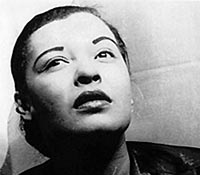
Carmen McRae was a jazz vocalist and pianist whose expressive phrasing, emotional depth, and sophisticated style earned her a lasting place among the greatest interpreters of American music.
Born in Harlem on April 8, 1920 to Jamaican parents, McRae was raised in a culturally rich environment that nurtured her early love for music. She studied classical piano and was heavily influenced by the recordings of Billie Holiday, whom she met as a teenager. That influence would remain a guiding force throughout her career, but McRae ultimately forged a distinctive voice of her own — combining sharp intelligence with a subtle, conversational delivery that set her apart from her contemporaries.
McRae began performing professionally in the 1940s, first as a pianist and later as a vocalist. Her breakout came in the 1950s when she signed with Decca Records and released a string of acclaimed albums that showcased her talent for reinterpreting the Great American Songbook.
Unlike many singers of the era, McRae paid meticulous attention to lyrics, often rephrasing and re-timing melodies to enhance the emotional truth of a song. Her interpretations of songs like “Midnight Sun,” “Round Midnight,” and “My Funny Valentine” revealed a performer who was as much an actor as a singer, imbuing every line with nuance and depth.
Throughout her career, McRae maintained a reputation for artistic integrity and independence. She refused to conform to the commercial pressures of pop stardom, instead choosing material that aligned with her values and creative instincts.
McRae collaborated with some of the most respected musicians in jazz — including Dizzy Gillespie, Benny Carter, Dave Brubeck, and George Shearing — while also working as a solo performer and bandleader. She was equally at home in intimate clubs and prestigious concert halls, bringing a sense of honesty and sophistication to every setting.
McRae also played an important cultural role during a time of immense social change. As a Black woman navigating the racially and gender-biased music industry, she remained unapologetically herself, often speaking out against injustices and supporting civil rights through her work and presence.
McRae’s confident, sharp-witted persona challenged stereotypes of female jazz singers as merely decorative or secondary. As a result, she helped pave the way for later generations of women in jazz to assert themselves as serious artists and storytellers.
By the time of her death in 1994, McRae had built a legacy defined by emotional authenticity, technical excellence, and fearless individuality. Her recordings continue to influence jazz vocalists around the world, and her approach to phrasing and lyric interpretation is still studied by singers across genres.
More than just a performer, Carmen McRae was a truth-teller in song, offering audiences a mirror into the complexities of love, loss, and life. Her contribution to American music is not only preserved in her recordings, but also in the powerful example she set as an artist who refused to compromise her voice.