Birmingham Movement


April 3 …
The Birmingham Movement was a pivotal civil rights campaign in the early 1960s that exposed the entrenched racial segregation in the South and galvanized nationwide support for racial justice and equality.
The movement — also known as the Birmingham Confrontation or Birmingham Campaign — officially began on April 3, 1963 in Birmingham, AL, one of the most segregated cities in the United States. It emerged from a long history of discrimination and the violent enforcement of Jim Crow laws affecting public spaces, employment, and housing.
Frustrated by systemic inequality, African Americans in Birmingham were inspired by the growing momentum of nonviolent resistance. They sought to challenge segregation and discriminatory practices through organized protests, sit-ins, boycotts, and marches. The campaign was strategically designed to capture national attention, with leaders intentionally staging events to provoke public outrage at the severe reactions of city authorities.
Key figures included thousands of local African Americans — students, clergy, and community members — who bravely faced arrest and violence for the cause. Among the prominent leaders were Dr. Martin Luther King Jr., Reverend Fred Shuttlesworth, and Reverend Ralph Abernathy. King’s philosophy of nonviolent civil disobedience became a cornerstone of the movement’s strategy, while Shuttlesworth’s fearless activism and organization of local protests laid crucial groundwork. The participation of student activists from the Alabama Christian Movement for Human Rights (ACMHR) and the Southern Christian Leadership Conference (SCLC) further enhanced the movement’s ability to sustain demonstrations under intense pressure.
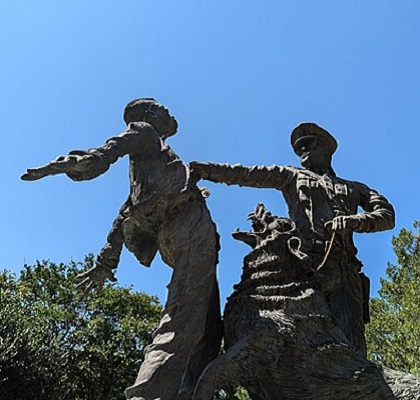
The impact of the movement on civil rights, society, culture, and history was profound. Its demonstrations, particularly the widely publicized children’s marches — including the 1963 Children’s Crusade — and confrontations with police using fire hoses and dogs, captured national media attention and incited outrage across the United States and beyond.
The campaign’s direct actions led to the desegregation of public facilities, including lunch counters, restrooms, and public transportation, while pressuring local businesses to adopt fairer hiring practices. Moreover, it laid the groundwork for federal civil rights legislation and played a crucial role in the passage of the Civil Rights Act of 1964, underscoring the moral urgency for change.
The primary beneficiaries of the movement were African Americans and other marginalized communities who gained better access to public spaces, educational opportunities, and employment. The entire American society also benefited from a more equitable legal framework. Key stakeholders included civil rights organizations, religious institutions, political leaders, and ordinary citizens who supported the movement through protests, advocacy, and financial contributions.
Over the decades, the movement received numerous accolades, including the posthumous recognition of Dr. Martin Luther King Jr. with the Nobel Peace Prize in 1964. This symbolically honored all the activists involved in the Birmingham Campaign.
Today, the Birmingham Movement is recognized as a defining moment in U.S. history, showcasing the transformative power of coordinated, nonviolent resistance to injustice.