

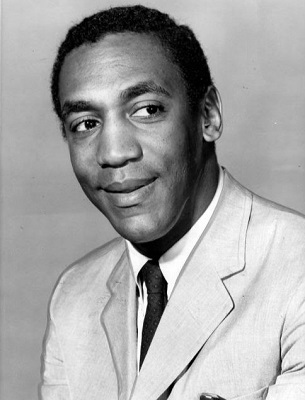
Bill Cosby
July 12 …
Bill Cosby is an actor, comedian, producer, and educator whose work — especially in television — profoundly shaped portrayals of Black family life, comedy’s rhythms, and educational advocacy in late 20th-century America.
Born on July 12, 1927 in Philadelphia, Cosby served in the U.S. Navy before attending Temple University on the G.I. Bill, where he earned a B.A. in 1971. He later pursued graduate studies in education and briefly taught elementary school, experiences that deepened his interest in children’s learning and educational programming.
Cosby’s early training as a stand-up comedian in clubs and on television variety shows refined his storytelling voice and observational style. Also, hands-on experience in writing and production equipped him with an understanding of the entertainment industry’s mechanics.
Cosby’s achievements include a groundbreaking television career as the star and producer of The Cosby Show, which showcased a successful, professional Black family and became one of the most beloved and influential American sitcoms. The series revitalized NBC and reshaped family sitcom conventions.
Prior to that, Cosby starred in I Spy, becoming the first Black actor to win multiple Emmy Awards for a dramatic performance. He also produced children’s programming like Fat Albert and the Cosby Kids and advocated for literacy and education through public speaking, books, and philanthropic efforts. His roles in production and business leadership paved the way for Black writers, producers, and performers in mainstream television.
Throughout his career, Cosby drew inspiration from earlier comedians and actors whose timing and craft he admired, citing the significance of African-American storytelling traditions and comedic predecessors like Redd Foxx and Richard Pryor. His contemporaries included industry figures such as producer/director Robert C. Kolodny and Norman Lear, with whom he collaborated. He mentored and provided opportunities for many writers, directors, and actors, especially African-American talents who emerged during and after the run of The Cosby Show, thus broadening representation both in front of and behind the camera.
Cosby received multiple Emmy Awards for I Spy, numerous Grammy Awards for comedy albums, and a Golden Globe. He received considerable industry recognition at the height of his career, with The Cosby Show garnering multiple awards and frequent acknowledgment as one of the most influential TV series of the 1980s. He was also awarded honorary degrees and recognized for his philanthropic contributions to education and the arts over several decades.
Cosby’s cultural impact was profound. He redefined national television’s portrayal of Black family life, inspired generations of comedians with his conversational storytelling style, and emerged as a public advocate for education and African-American achievement. His success illustrated the commercial viability of Black-led, family-oriented programming and helped normalize the hiring of Black creatives for major network television projects.
However, public and historical evaluations of Cosby’s legacy are complex. Many legal developments have spurred discussions about the separation of art from the artist. This includes accountability for public figures and how cultural institutions commemorate influential creators.
While his artistic accomplishments and pioneering role in the industry shaped television, comedy, and educational advocacy, subsequent criminal convictions and allegations — along with their legal and cultural ramifications — have prompted a reevaluation of the legacy of Bill Cosby.
