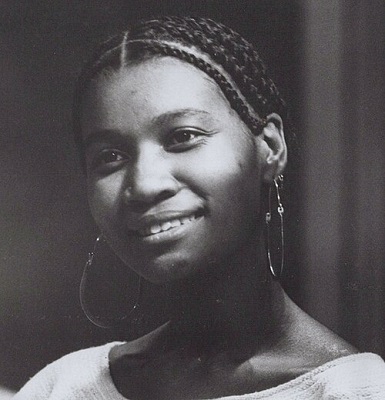
Amina Baraka


December 5 …
Amina Baraka is a poet, performer, and cultural activist whose writing and community leadership have helped shape the legacy of the Black Arts Movement and expanded the role of poetry as a tool for social justice and cultural identity in the United States.
Born Sylvia Robinson on December 5, 1942 in Charlotte, NC and was raised in Newark, NJ, Baraka grew up in a family deeply involved in labor organizing and community activism. Her grandparents were musicians skilled in blues instruments like the guitar, harmonica, and piano, making their home a vibrant hub for neighborhood cultural activity. This environment provided her with an early appreciation for both music and community participation.
Baraka attended Newark’s Arts High School, where she cultivated her interests in dance, theater, and poetry, eventually immersing herself in the city’s dynamic arts scene.
During the 1960s, she became deeply involved with the burgeoning Black Arts Movement, collaborating with writers and performers who were reshaping African American artistic expression. Her marriage to the influential poet and playwright Amiri Baraka introduced her to a circle of intellectuals, artists, and activists committed to intertwining literature with political and cultural change.
As a poet and cultural organizer, Baraka played a vital role in a variety of artistic and community initiatives that fused literature, music, and political activism. She showcased her poetry and dance at Newark’s Jazz Arts Society and the renowned cultural venue known as the Cellar, where innovators like Sun Ra, Marion Brown, Woody Shaw, and Larry Young explored experimental jazz and spoken-word performances.
Her poetry often delved into themes of family, feminism, social justice, and African American identity, drawing inspiration from the rhythms of jazz and the political fervor of the Civil Rights Movement and Black Power Movement. Alongside Amiri Baraka, she co-edited significant literary works, including Confirmation: An Anthology of African American Women, The Music: Reflections on Jazz and Blues, and 5 Boptrees.
Baraka later published her own poetry collection, Blues in All Hues, with her work also appearing in notable anthologies like Unsettling America and Bum Rush the Page, introducing her voice to new generations of readers and spoken-word artists.
Baraka’s influence reached beyond writing into education, activism, and the establishment of cultural institutions. She played a pivotal role in founding the Spirit House cultural center in Newark and developed the African Free School, a liberation-based educational program aimed at teaching history, culture, and political awareness to community youth.
Throughout her career, Baraka mentored young writers and activists, participating in organizing women’s conferences and cultural events linked to movements such as the Congress of Afrikan People and later the Black Radical Congress. Many individuals inspired by the intellectual and artistic environment she fostered include younger poets, performers, and community leaders, one of whom is her son Ras Baraka, who later became mayor of Newark and a poet in his own right.
In recognition of her decades of cultural contributions, Amina Baraka received several honors, including a Lifetime Achievement Award from the New York Friends of People’s World and an Unsung Hero Award from the community organization 211 Community Impact, acknowledging her lasting impact on American literature, grassroots activism, and African American cultural history.