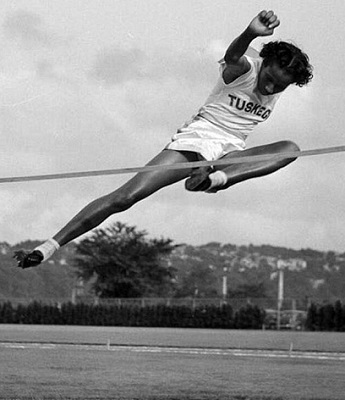
Alice Coachman



November 9 …
Alice Coachman was a pioneering American track and field athlete whose historic Olympic victory and lifelong advocacy helped transform opportunities for women and African Americans in sports and society.
Born on November 9, 1923 in Albany, GA, Coachman grew up in the segregated South, where access to athletic facilities for Black girls was greatly restricted. She adapted her training by running barefoot on dirt roads and practicing high jumps using homemade equipment, which helped her develop extraordinary natural talent.
After attending Madison High School, she enrolled at Tuskegee Institute, training under the guidance of Cleveland Abbott. His mentorship, paired with the supportive environment at Tuskegee, refined her technique and competitive discipline.
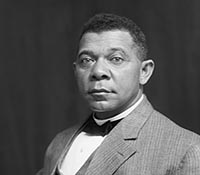
Coachman successfully balanced her academics and athletics, embodying a tradition that prioritized education, character, and racial uplift. She drew inspiration from the broader community of Black athletes seeking recognition and from the institutional legacy left by leaders like Booker T. Washington.
Coachman’s athletic achievements were groundbreaking. She dominated national competitions, winning 10 consecutive Amateur Athletic Union (AAU) outdoor high jump titles from 1939 to 1948, along with multiple indoor championships. Her most notable accomplishment came at the 1948 Summer Olympics, where she secured the gold medal in the high jump, becoming the first Black woman from any country to win Olympic gold.
Competing alongside noteworthy contemporaries such as Fanny Blankers-Koen, she also paved the way for future pioneers like Tidye Pickett and Louise Stokes. Her victory was celebrated globally, symbolizing both athletic excellence and the gradual dismantling of racial and gender barriers.
Following the Olympics, Coachman became one of the first Black female athletes to gain national endorsements. This included a historic partnership with the Coca-Cola Company.
Beyond her athletic career, Coachman dedicated herself to education, youth development, and social progress. She worked as a teacher and coach and later established the Alice Coachman Track and Field Foundation to support young athletes and promote fitness. Her influence is visible in later generations, including stars like Wilma Rudolph, who elevated the global visibility of Black women in track and field.
Coachman received numerous accolades, including induction into the USA Track & Field Hall of Fame and the U.S. Olympic & Paralympic Hall of Fame. She is celebrated as one of the greatest athletes of the 20th century.
The legacy of Alice Coachman lives on not just in records and medals, but also in the greater opportunities and cultural recognition she helped secure, solidifying her place as a central figure in the history of American sports, civil rights, and education.