Alice Augusta Ball


July 24 …
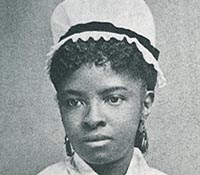
Alice Augusta Ball was an American chemist and pharmacist whose groundbreaking research in medicinal chemistry transformed the treatment of leprosy and established her as a pioneering figure in science and healthcare.
Born on July 24, 1892 in Seattle, Ball was the daughter of middle-class African American parents who valued education and intellectual achievement. Displaying an early talent for science and mathematics, she pursued higher education at the University of Washington, where she earned a bachelor’s degree in pharmaceutical chemistry. During her studies, she co-authored a research paper on benzoylation reactions published in the Journal of the American Chemical Society, making her one of the first African-American women to publish in a major scientific journal.
Motivated by the possibilities of medical research, she continued her studies at the University of Hawaii, working under the mentorship of chemist Harold H. Lloyd. Her mentors recognized her extraordinary abilities and encouraged her to explore plant-based compounds for therapeutic uses, paving the way for her groundbreaking scientific contributions. There, she completed a master’s degree in chemistry in 1915, becoming the first woman and first African-American to achieve the degree. She was subsequently appointed as the college’s first female chemistry instructor.
Ball’s most notable achievement was the development of the “Ball Method,” a technique for extracting the active water-soluble compounds from chaulmoogra oil, the only effective treatment for leprosy &mdash Hansen’s Disease — in the early 20th century. Before her intervention, chaulmoogra oil was challenging to administer and often resulted in severe side effects.
Through her innovative chemical processes, Ball produced a form of the oil suitable for injection, significantly enhancing patient outcomes. Contemporary chemists and pharmacologists recognized her influence, as her work directly impacted physicians and researchers tackling infectious diseases. Ball’s ingenuity and precision established a new standard in pharmaceutical chemistry and opened pathways for future African American women in scientific research.
Tragically, Ball died unexpectedly in 1916 at the young age of 24, before she could fully fulfill her professional potential or gain widespread acclaim. Nevertheless, her contributions have been acknowledged posthumously, leading to numerous honors, including her induction into the National Women’s Hall of Fame and recognition from various scientific and historical organizations for her trailblazing work in chemistry and medicine.
The legacy of Alice Augusta Ball continues to inspire scientists, notably women and African Americans, standing as a testament to the transformative power of intellect, innovation, and perseverance in advancing science, medicine, and public health.