

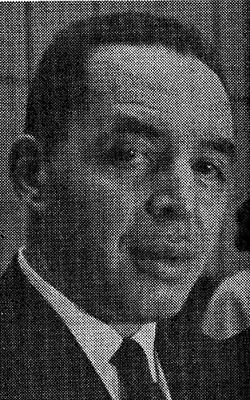
Albert Cleage Jr.


June 13 …
Albert Cleage Jr. was a minister, political thinker, and writer whose work reshaped Black religious life and contributed significantly to the ideological foundations of Black nationalism and liberation theology in the United States.
Born on June 13, 1911, in Detroit and raised in Indianapolis,Cleage grew up in a prominent African American family deeply engaged in civic life. His father was a successful physician, and his upbringing emphasized racial pride, education, and leadership.
Cleage attended Wayne State University before pursuing theological studies at Oberlin College’s Graduate School of Theology, where he was introduced to liberal Protestant thought and social gospel traditions. Initially ordained in a mainstream Christian denomination, he grew increasingly disenchanted with traditional churches for their failure to address systemic racism.
Influenced by Marcus Garvey’s teachings and the emerging Black nationalist movement, he began to reframe Christianity through a distinctly Black cultural and political perspective.
Cleage became a central figure in the Civil Rights Movement and Black Power Movement through his leadership of Detroit’s Shrine of the Black Madonna, which he founded in 1967. There, he promoted a theology that recognized Jesus as Black and presented Christianity as a means of Black liberation rather than a passive endurance. His 1968 seminal book, The Black Messiah, articulated these concepts and became a cornerstone of Black liberation theology.
Cleage further developed his ideas in works like Black Christian Nationalism and The Black Messiah, Volume II, merging religious ideology with calls for economic self-determination and political autonomy. As a political activist, he ran for public office and co-founded organizations aimed at establishing independent Black institutions, including the Pan-African Orthodox Christian Church.
Throughout his career, Cleage interacted with and was influenced by key figures of his time. This included Malcolm X, whose focus on Black self-defense and nationalism resonated with Cleage’s evolving beliefs, and Martin Luther King Jr., whose nonviolent philosophy he both respected and critiqued. He shared the stage with thinkers and activists like Stokely Carmichael, James Cone — an important voice in Black liberation theology — and Adam Clayton Powell Jr.
Cleage’s influence reached a generation of Black clergy and activists who embraced Afrocentric theology and community empowerment, even if specific proteges are less formally recorded. His ideological inspirations included Garvey and other Pan-African leaders who championed Black identity and global unity. The Shrine of the Black Madonna he founded continues to serve as both a church and community center, exemplifying his commitment to faith-based activism and economic empowerment.
Remembered as a radical theologian and cultural architect, Albert Cleage Jr. redefined the interplay between religion, politics, and Black identity in America, leaving an indelible mark on civil rights history, African American religious life, and the broader fight for social justice.
