



April 1 …
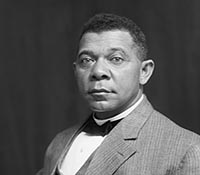
Joseph Winthrop Holley, born to former slaves in Winnsboro, SC, and a graduate of Phillips Academy and Pennsylvania’s Lincoln University, founded the Albany Bible and Manual Training Institute — many years later named Albany State University (ASU) — in 1903. The new school was successful in its mission to provide religious and basic education, as well as teacher training to the local black population of Albany, GA.
Today, the University has established a long tradition of celebrating its Founder’s Day in early April each year to honor the founding of the institution and its founder, Dr. Holley.
In 1917, the state began providing financial support to the school, granting it two-year status. The school added training in agriculture and was renamed the Georgia Normal and Agricultural College. It became a part of the University System of Georgia in 1932.
In 1943 added a four-year program, concentrating on teacher education and home economics. Then the school was renamed Albany State College.
Students at Albany State College played a significant role in the Civil Rights Movement of the early 1960s, joining representatives of the Student Nonviolent Coordinating Committee (SNCC) and other activist groups to create “The Albany Movement.” The combined organizations invited prominent national civil rights leaders to Albany, including Martin Luther King Jr., to join their campaign. More than 1,000 protesters were arrested, first among them were Albany State students.
One of ASC’s activist students, Bertha Gober, participated in a sit-in at the Albany bus station white waiting room. Refusing to leave after being ordered to do so, she and another student, Blanton Hall, were arrested and subsequently suspended from school, an action greeted with animosity from the student body and the Black community. Gober continued in the Civil Rights Movement as one of SNCC’s Freedom Singers.
Another ASC student who left the college to work with SNCC, Bernice Johnson Reagon, later became the noted cultural historian who formed the well-known a cappella group, Sweet Honey in the Rock.
Albany State College began offering graduate degrees in 1981. With the growing success of its graduate programs, in 1996 the state Board of Regents approved the renaming of the institution to Albany State University.
Albany State University has produced many notable Black cultural and political leaders throughout its history, including: Illinois Representative William L. Dawson (1905), the first Black to chair a congressional committee who helped shape civil rights legislation in the U.S. Congress; Alice Coachman (1949), the first African American woman to win an Olympic gold medal and only American woman to win gold in the 1948 games; and, Alfred C. Johnson (1979), molecular biologist and deputy director and senior leader at the National Institutes of Health.
Sources:
- Huff, Christopher. “Albany State University.” New Georgia Encyclopedia, last modified May 11, 2013.
