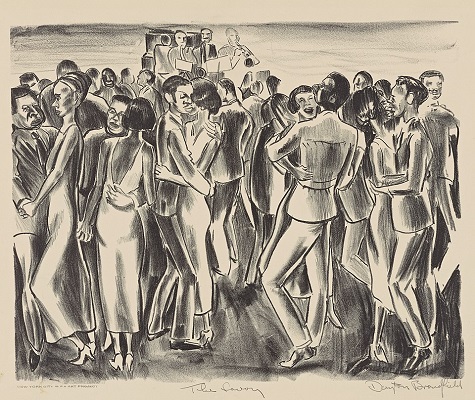
Savoy Ballroom


March 12 …
The Savoy Ballroom — opened on March 12, 1926 in Harlem on Lenox Avenue between 140th and 141st Streets — quickly became one of the most celebrated dance halls in American history.
Known affectionately as “The Home of Happy Feet,” the Savoy was revolutionary in its open-door policy, welcoming patrons of all races during a time when segregation was the norm in most public venues. This inclusive atmosphere not only set it apart from places like the Cotton Club, but also made it a central hub of social life and artistic expression during the Harlem Renaissance and beyond.
The Savoy was renowned for its enormous size, polished mahogany interior, and dual bandstands that allowed continuous music without interruption. Its dance floor, made of sprung wood, spanned an entire city block and played host to thousands of dancers each week.
More than just a nightclub, the Savoy was a cultural institution that nurtured and showcased the most innovative dance and music of its time. It was here that the Lindy Hop, an improvisational swing dance that would take the world by storm, was born and perfected by dancers like Frankie Manning and Norma Miller.
Live music was at the heart of the Savoy experience. Legendary big bands led by Chick Webb, Count Basie, and Benny Goodman played to packed crowds, engaging in high-energy “battle of the bands” that pushed musical boundaries and electrified audiences. Chick Webb, the Savoy’s house bandleader, discovered and nurtured young talents like Ella Fitzgerald, whose career was launched after winning an amateur contest at the venue. These performances helped elevate swing and jazz into dominant forces in American music, bridging racial divides through rhythm and movement.
What truly set the Savoy apart was its democratic spirit. Unlike many elite clubs of the era, the Savoy treated all patrons with dignity and provided a space where interracial socializing could flourish. Black and white dancers competed together on the same floor, creating a unique environment where merit and talent were the currency of success. This cultural mixing was a powerful, if quiet, form of resistance to Jim Crow norms and an early example of the role that music and dance could play in breaking down racial barriers.
The influence of the Savoy extended well beyond Harlem. The dances created there spread across the country and eventually the world, influencing everything from ballroom competitions to Hollywood musicals. It helped solidify New York’s role as a center for jazz innovation and placed African American cultural achievements at the forefront of the American artistic scene. Swing dance styles that emerged from the Savoy contributed to the development of rock and roll, hip-hop, and other later forms of American popular culture.
The Savoy closed in 1958 and was demolished to make way for a housing complex, but its legacy remains deeply embedded in American history. Its memory lives on in the global swing dance community and in the music that once reverberated through its walls.
The Savoy Ballroom was more than a dance hall — it was a symbol of possibility, creativity, and unity during a period marked by deep social divisions. Its story is a testament to the enduring power of art and movement to challenge injustice and celebrate shared humanity.