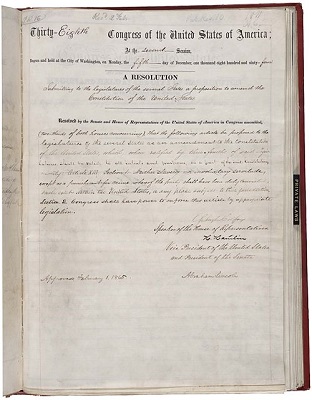
Thirteenth Amendment




December 18 …
The Thirteenth Amendment to the U.S. Constitution (Amendment XIII) permanently abolished slavery in the United States and reshaped the nation’s legal and moral foundations.
Passed by Congress on January 31, 1865 during the final months of the Civil War, the amendment was ratified by the necessary states on December 6, 1865 and officially proclaimed on December 18, 1865. Its succinct, yet powerful language abolished slavery and involuntary servitude — except as punishment for a crime — establishing a constitutional foundation for freedom that had never existed nationwide before.
The amendment arose from a long and contentious history of slavery in North America and growing sectional tensions between free and slave states. Previous actions, like the Emancipation Proclamation, had freed enslaved individuals in rebellious states, but did not entirely eradicate slavery or ensure its permanent end. This amendment addressed this gap.
The amendment directly impacted nearly four million enslaved African Americans. Because of it, they were transformed from property under the law into legally recognized individuals, though they were not yet fully equal citizens.
The primary beneficiaries of the amendment were African Americans who gained legal freedom, while it also redefined labor systems in the South and had lasting effects on immigration, industrialization, and social mobility. However, the exception clause permitted forced labor through criminal punishment, leading to practices like convict leasing that disproportionately affected Black communities.
This first of the three Reconstruction Amendments adopted following the Civil War, outcomes of the amendment were profound, yet incomplete. It dismantled the legal institution of slavery, setting the stage for further reforms such as the Fourteenth Amendment and Fifteenth Amendment to the U.S. Constitution.
The amendment reshaped American culture by redefining concepts of freedom and human rights, but systemic inequalities persisted through segregation, discrimination, and economic disparities. Its legacy continues to shape discussions on criminal justice, civil rights, and the meaning of freedom in contemporary America.
The Thirteenth Amendment marked a pivotal moment in U.S. history by abolishing slavery and redefining the nation’s constitutional values. While it achieved a significant moral and legal transformation, its limitations and the challenges that followed underscore the complexity of translating legal freedom into genuine equality, a process that remains ongoing.