



September 17 …
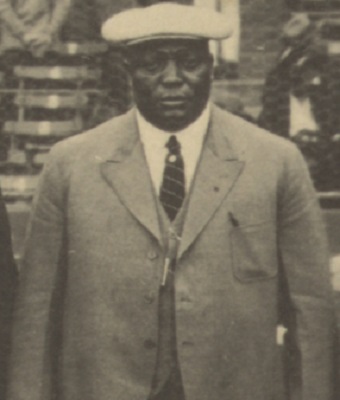
Rube Foster was a transformative figure in American baseball whose leadership, innovation, and advocacy laid the foundation for organized Black professional baseball and reshaped the sport’s place in American society. He is known as the “Father of Black Baseball.”
Born Andrew Foster on September 17, 1879 in Calvert, TX, he grew up in the post-Reconstruction South, where racial segregation profoundly shaped daily life and opportunities. Although little is known about his formal education, he — like many players of his time — honed his skills through sandlot and semi-professional play, quickly earning recognition for his intellect and mastery of the game.
Foster reportedly acquired the nickname “Rube” after outpitching the legendary Rube Waddell in an exhibition, marking the beginning of his ascent. His early experiences in a segregated America fueled both his competitive spirit and his commitment to establishing independent Black institutions within baseball.
Foster’s achievements as a player, manager, and executive were remarkable. As a dominant pitcher in the early 1900s, he played for and led teams like the Chicago American Giants, crafting strategies that prioritized speed, defense, and aggressive baserunning — often considered a precursor to modern “small ball.”
Foster’s crowning accomplishment occurred in 1920 when he founded the Negro National League, the first lasting professional league for African American players. This groundbreaking endeavor created economic opportunities, organizational stability, and national visibility for Black athletes excluded from Major League Baseball due to segregation.
Foster’s influence extended beyond the diamond as he negotiated contracts, scheduled games, and promoted the league. He effectively served as the league’s commissioner and chief architect.
Operating within a network of influential contemporaries and competitors — including figures like John Henry Lloyd and Cool Papa Bell — Foster’s legacy benefited later stars who thrived under the system he helped establish. He drew inspiration from the structures and business models of white baseball leagues, adapting them to fit Black-owned teams and communities.
As a mentor, he instilled discipline, professionalism, and strategic acumen in generations of players and managers; many of his protégés emerged as leaders in Negro League Baseball. His efforts mirrored broader trends in early 20th-century African American life, resonating with the self-help and institution-building philosophies championed by leaders like Booker T. Washington, while his league became a cultural cornerstone for Black communities nationwide.
Foster’s legacy was honored with his induction into the National Baseball Hall of Fame in 1981, recognizing his significant impact on the game as both a pioneer and an executive. Although he died on December 9, 1930, after years of declining health, his vision lived on through the continued success of the Negro leagues and the eventual integration of Major League Baseball starting in 1947.
Today, Rube Foster is celebrated not just as a baseball innovator, but also as a pivotal figure in American cultural and social history, whose work furthered economic empowerment, community pride, and the protracted fight for racial equality in sports and beyond.
