William D. Alexander
August 21 …
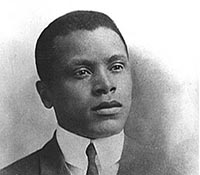
William D. Alexander was a pioneering American filmmaker whose work bridged government media, independent Black cinema, and international documentary, leaving a lasting imprint on film, culture, and the global representation of African diasporic life.
Born on August 21, 1916 in Denver, CO, Alexander was educated at what is now the University of Northern Colorado and Chicago State University, which played a pivotal role in his early intellectual and creative growth. His professional journey began in Washington, DC, where he worked for the National Youth Administration, producing radio content that showcased the lives of middle-class African Americans.
During World War II, he joined the Office of War Information. There, he contributed over 250 installments of the newsreel series All-American News, which highlighted Black military contributions and civic life during a time when such depictions were seldom seen in mainstream media.
Alexander’s achievements grew significantly after founding Alexander Productions in New York City and helping to establish the Associated Film Producers of Negro Motion Pictures. In the 1940s, he produced impactful “race films” such as Souls of Sin and musical shorts like Jivin’ in Bebop, which featured renowned artists like Dizzy Gillespie and Billy Eckstine.
This positioned Alexander as an essential cultural intermediary bridging jazz, theater, and cinema. His subsequent move to London marked a transition toward international documentary filmmaking, where he became an official filmmaker for countries like Liberia and Ethiopia.
His documentaries — including Village of Hope and Portrait of Ethiopia — received global acclaim. This included a United Nations Award in Madrid, and high honors at prestigious events like the Cannes Film Festival and Venice Film Festival.
Alexander’s influences can be situated within the broader lineage of early Black filmmakers such as Oscar Micheaux and William D. Foster, who aimed to counter racial stereotyping through independent productions. His career intersected with prominent entertainers and cultural figures of his time. This included boxer Joe Louis, who featured in his film The Fight Never Ends, and later actors like O.J. Simpson in the 1974 film, The Klansman.
Alexander’s contemporaries included mid-century independent producers and documentarians navigating both Hollywood and independent film circles. His work helped lay the groundwork for future generations of Black filmmakers seeking narrative and creative autonomy, even if details about specific protégés remain sparse.
Beyond individual films, Alexander’s overall impact lies in his expansion of African American representation in media and its connection to global postcolonial narratives. His documentaries on newly independent African nations contributed to international cultural diplomacy and reshaped Western views on Africa during the mid-20th century.
Inducted posthumously into the Black Filmmakers Hall of Fame, William D. Alexander earned numerous honors from African nations and international festivals, which solidified his legacy as both a cultural ambassador and a cinematic innovator.