African Theatre

September 17 …
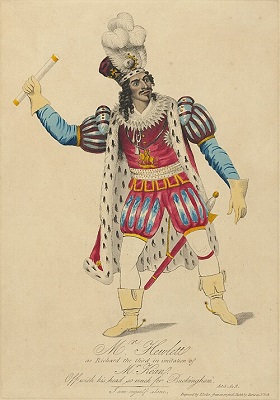
The African Theatre Acting Troupe holds a significant place in American theater history, often regarded as one of the earliest expressions of Black theater in the United States. The Troupe formally opened on September 17, 1821, with a performance of Shakespeare’s renowned play Richard III, starring an all-black cast.
Founded in the early 19th century, the troupe began its journey in New York City in 1821, making an indelible mark on both the cultural and social landscape of the time. The group was founded by a collective of Black actors, most notably William Alexander Brown, who is widely credited as the first Black man to establish a professional African American theater company.
The Troupe was born out of the desire to create a platform for Black actors and playwrights during a period when Black people were largely excluded from mainstream theaters in America. This was a time when slavery was still legal in the southern United States, and African Americans faced harsh discrimination and limited opportunities in virtually every aspect of society.
Brown, inspired by the performances he had seen at white theaters, believed that African Americans deserved their own space to showcase their talents. He opened the Troupe in lower Manhattan, where they performed both classical plays and original works tailored to their own experiences.
The Troupe’s inaugural production was the Shakespearean play Othello, which notably featured Black actors in lead roles. This was a bold and revolutionary act, as Black people were often relegated to minor or stereotypical roles in theaters. It not only challenged these norms but also laid the groundwork for the development of a distinct, authentic voice in Black performing arts.
The impact of the African Theatre went beyond just providing a space for Black actors. It was instrumental in reshaping public perceptions of African Americans. Before the Troupe’s performances, Black people were often seen through the lens of racist stereotypes — either as subhuman or as comic figures. It sought to change this by offering powerful, dignified, and complex portrayals of Black life. It gave Black actors a platform to show their range and challenge the narrow scope of their roles in mainstream theaters.
The Troupe also played a crucial role in fostering a sense of Black pride and solidarity. By showcasing the talents of African American actors and playwrights, it helped instill a sense of cultural identity and self-worth within the Black community. It also served as a rallying point for social change, especially in the midst of growing abolitionist sentiment and movements seeking greater equality for African Americans.
One of its most notable contributions was the performance of the play “The Drama of King Shotaway” by William Brown himself. This play, written and performed by Black actors, was one of the first original works to emerge from an African American theater company. It depicted the revolt of the indigenous people of the Caribbean against colonial oppression, providing a striking example of the ways in which African American theater could tell stories not just of American Black life, but of global resistance to oppression.
Despite its successes, the Troupe faced significant opposition. In 1823, it was forced to shut down due to escalating pressures from white theater owners and city officials, who were uncomfortable with the prominence of Black actors. However, the legacy of the Troupe endured, as it set a precedent for future generations of Black theater artists.
The Troupe’s influence on American theater and culture is profound. Though its existence was short-lived, its contributions to the development of African American theater cannot be overstated. It opened the door for later Black theater companies, including the Negro Ensemble Company in the 1960s, and helped lay the foundation for groundbreaking playwrights like Langston Hughes, Lorraine Hansberry, and August Wilson.
Furthermore, the African Theatre’s existence marked a symbolic turning point in the broader struggle for racial equality. It provided a glimpse into the power of art as a tool for social change, demonstrating that theater could serve as a means of resistance, self-expression, and empowerment.
The African Theatre was more than just a theater company. It was a catalyst for cultural change, a beacon of Black excellence, and a trailblazer in the fight for representation in the arts.
The legacy of the African Theatre Acting Troupe endures in the countless African American artists, actors, and playwrights who followed in its footsteps, and its contributions to American history remain a testament to the power of art to challenge, transform, and elevate society.